If your team-chat bill keeps climbing while your AI tools sit in a separate tab, the buzz vs slack question is suddenly worth asking — and I put both through a proper hands-on video test to answer it. Buzz is Jack Dorsey's new free, open-source team workspace that looks and feels like Slack, but with AI agents built straight into the channels. Slack is the polished, established tool most teams already know. This is my honest read on how they actually compare when you use them for real work.
📺 Watch: Jack Dorsey's Buzz DESTROYS Hermes Agent?
🔥 Get the Agent OS as a free bonus: AI Profit Boardroom members get the full Agent OS zip, prompt libraries, daily tutorials and weekly live coaching calls. → Get inside
I am not here to crown a universal winner. Buzz and Slack are aimed at slightly different jobs, and which one fits depends on how your team works and whether you already live inside AI coding tools. Here is what each one is, where each pulls ahead, and the honest limitations of both.
What is Buzz?
Buzz is a free, open-source team workspace from Jack Dorsey, built on Nostr — an open protocol rather than a single company's private servers. On the surface it behaves almost exactly like Slack: you get channels, public and private spaces, and rooms for different projects or teams. If you have ever used Slack, you will feel at home within minutes.
The difference sits inside those channels. Buzz has AI agents built in as first-class members of your workspace, not bolted-on add-ons. You can grab the app from buzz.xyz or from GitHub. In my testing the desktop app was the easiest way to get started, and a mobile app is on the way.
How Buzz handles AI agents
This is what makes Buzz genuinely interesting. Instead of asking you for a fresh API key or an extra subscription, Buzz uses the Claude Code or Codex subscriptions you may already pay for — you pick one or both, and there is no added cost and no key to wrangle.
Out of the box you get three default agents: Fizz the maker, Honey the writer, and Bumble the researcher. You can also create your own custom agents shaped around the way your team works. Crucially, these agents have memory and can reach your local setup. In my test, an agent reached my own files and my WordPress, drafted an SEO post using my trained workflow, and even used computer-use to open and check a link. That is well past a chatbot that only talks.
What is Slack?
Slack barely needs an introduction. It is the established, polished team-chat tool that a huge number of companies already run on, and it earns that reputation — it is reliable, well-designed and deeply woven into the wider software world. For pure team communication, it is excellent.
Two honest points, though. First, Slack is paid, and the cost grows as your team grows. I left Slack myself because it became too expensive for my team size, and I moved us over to Discord. Second, Slack has no built-in AI agents that actually do your work. You can bolt on integrations and third-party bots, but the do-the-task-for-you layer that Buzz ships with is not native to Slack.
Buzz vs Slack: the head-to-head
Here is how the two line up across the things most teams actually care about. Treat this as my opinion from hands-on use, not a lab result.
| Factor | Buzz | Slack |
|---|---|---|
| Price | Free and open-source | Paid, and rises with team size |
| Feel & layout | Slack-like: channels, public/private, rooms | The polished original |
| Built-in AI agents | Yes — native agents that do work | No native agents; add integrations |
| AI cost | Uses your Claude Code / Codex sub, no API key | Depends on the third-party tools you add |
| Maturity | New, desktop-first, mobile coming | Established, cross-platform, polished |
| Best for | Teams already using AI coding tools | Teams wanting proven, mainstream chat |
Setup and cost
This part surprised me. In my Goldie Bench testing, Buzz was far easier to set up than expected — the desktop app had me in a working, Slack-style workspace quickly, with the agents ready to go on subscriptions I already held. Because it is free and leans on tools you may already pay for, the running cost can be close to nothing. Slack, by contrast, is a known quantity you pay for month after month, and that bill is exactly what pushed my own team elsewhere.
The AI agents that actually do the work
Chat is table stakes; both tools nail it. The real gap is what happens after someone types a request. In Slack, a message is a message. In Buzz, you can tag an agent and it goes and does the task — reaching your files, touching your WordPress, running a trained workflow, even using computer-use to verify a link. For anyone who wants their workspace to produce work, not just discuss it, that is a meaningful difference.
The honest limitations of Buzz
I promised balance, so here are the catches. Buzz makes you tag an agent in every single time you want it to act. That is a deliberate design choice to stop agents flooding channels with chatter, and once you know it, it is fine — but it does mean the agents are on-demand helpers, not always-on operators watching every message.
The bigger caveat: Buzz is only genuinely useful if you already use Claude Code and/or Codex. The whole no-extra-cost model depends on those subscriptions. If your team does not touch either, the built-in-agent advantage largely disappears, and a mature tool like Slack may serve you better today.
Where Hermes and always-on automation go further
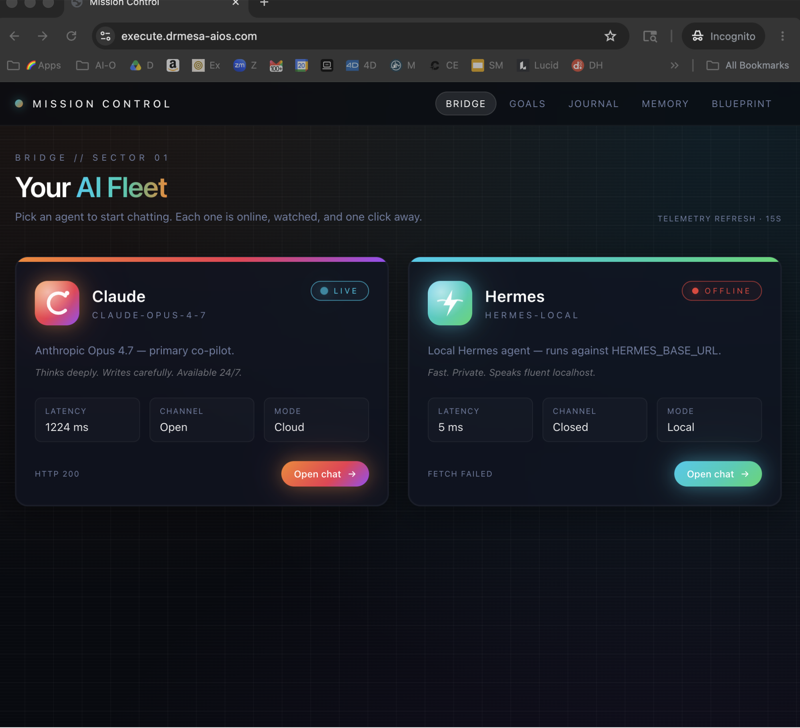
Buzz is a superb, easy, free way to get team chat with capable AI helpers inside it, and I rate it highly for that. But tagging an agent per task is not the same as always-on, autonomous automation. When I need agents that run deeper background jobs on their own — not waiting to be pinged each time — I reach for my Agent OS and the Hermes workspace that runs on top of it.
Think of it as a ladder, not a rivalry. Buzz brings agents into everyday team chat. Agent OS, which I teach inside the AI Profit Boardroom, is the heavier setup for continuous, hands-off workflows that keep producing while you step away. Slack still has its place too, as rock-solid communication for teams that want the mainstream standard. They are not enemies; they sit at different points on the automation curve.
If you want to make money running AI agents in your workspace, check out the AI Profit Boardroom — the Agent OS, the Hermes workspace, and the exact agent workflows I use to turn a chat window into shipped, paid work are all inside, with a community building real offers. → Build your money-making AI workspace
Which should you pick?
My simple rule of thumb from the test:
- Pick Buzz if your team already uses Claude Code or Codex and you want free, Slack-style chat with real AI agents built in from day one.
- Stay on Slack if you need the most polished, mainstream, cross-platform chat and you are happy to add AI through integrations.
- Go further with Agent OS when tagging an agent per task is not enough and you want always-on, autonomous workflows doing the work in the background.
For a lot of AI-first teams, the honest answer is Buzz for daily chat-plus-agents with an Agent OS underneath for the heavy lifting — and Slack is still a perfectly good choice if mature, familiar communication is all you need.
Buzz vs Slack FAQ
Is Buzz really free?
Yes. Buzz is free and open-source, available from buzz.xyz and GitHub. The AI agents run on your existing Claude Code or Codex subscription, so there is no separate API key or added cost to use them.
Who made Buzz?
Buzz comes from Jack Dorsey and is built on Nostr, an open protocol. That open-source, open-protocol foundation is a large part of why it can be free and why anyone can inspect or contribute to it.
Does Slack have built-in AI agents like Buzz?
Not in the same native way. Slack is superb team chat, but the agents that go and do a task for you are not built in — you add them through third-party integrations. In Buzz, that agent layer ships with the app itself.
What is the catch with Buzz?
Two things. You must tag an agent in each time you want it to act, by design, to stop channels flooding with agent chatter. And Buzz only pays off if you already use Claude Code and/or Codex, since that is what powers the agents at no extra cost.
Should I switch from Slack to Buzz?
If you are AI-first and cost-conscious, Buzz is well worth testing. If you rely on Slack's maturity and integrations, there is no rush. Many teams will run Buzz for agent-powered work and keep a proven tool for everything else.
The Bottom Line
On buzz vs slack, my hands-on take is that Buzz is the more exciting tool for AI-first teams: free, open-source, Slack-like, and shipping real AI agents that actually do work on subscriptions you may already own. Slack remains the polished, mature standard, but it is paid and its AI is bolted on rather than built in. Buzz's honest limits — tagging an agent each time, and needing Claude Code or Codex — are easy to live with if you are the right user. And when you outgrow tag-an-agent chat and want always-on automation, that is where Agent OS and Hermes take over. Test Buzz, keep what works, and let the tools that ship real results run your workspace.