Fugu Max wins on price and Fugu Ultra v2 wins on peak capability — that is the outcome of the fugu max vs fugu ultra question in one line. Sakana AI released both on 11 September 2026, and per the official announcement they share "the same core orchestration architecture optimized for two distinct missions": Fugu Max is the cost-efficiency play at 2 dollars per million input tokens and 6 dollars per million output tokens, while Fugu Ultra v2 is the capability play at 5 dollars input and 30 dollars output per million at standard context lengths.
📺 Watch: NEW Fugu Max and Fugu Ultra v2 Just Dropped!
🔥 Get the Agent OS as a free bonus: AI Profit Boardroom members get the full Agent OS zip, prompt libraries, daily tutorials and weekly live coaching calls. → Get inside · Want AI SEO help 1-on-1? Book a free SEO strategy session →
Fugu Max vs Fugu Ultra: The Short Version
| Fugu Max | Fugu Ultra v2 | |
|---|---|---|
| Mission | Cost-efficiency | Peak capability |
| Pricing per 1M tokens | 2 dollars in / 6 dollars out | 5 dollars in / 30 dollars out (standard context) |
| Benchmark claim (per Sakana) | Best overall score on six benchmarks, including Terminal Bench 2.1, GPQAD, AA-LCR, GDP.pdf, AutomationBench and SWEFish | Best or joint-best on five of eight benchmarks; Chartography 48.3 vs Opus 5 at 27.3; DeepSWE 74.3 |
| Best for | Volume work: agents, pipelines, drafts, research | The hardest tasks where output quality is the whole point |
Both figures and benchmark claims above come from Sakana AI's release announcement of 11 September 2026 — as with any vendor-published benchmarks, treat them as Sakana's claims about its own models until independent results accumulate.
The naming needs one clarification: these are siblings, not tiers of the same product. Ultra v2 is the second generation of the capability line, while Fugu Max launches as the flagship of the cost line — so "which one is the upgrade" is the wrong question. The right question is which mission matches the work you actually run, and that is what the rest of this comparison walks through.
They Are Orchestrators, Not Single Models
The most important thing to understand before choosing a side in fugu max vs fugu ultra is that neither is a monolithic model. Sakana describes the architecture as "dynamically routing tasks to the leanest model capable of solving them", integrating open-weights and specialised models — the announcement names the NVIDIA Nemotron family among them. You send one request to one API; the orchestration layer decides which underlying models do the work and stitches the answer together. That is a genuinely different product category from the single-brain releases covered in the Quasar 438B write-up, and it explains the pricing: routing easy work to lean models is precisely how Sakana can undercut frontier per-token rates — the announcement claims output costs 40 to 60 percent lower than Sonnet 5, GPT 5.6 Terra and Kimi K3 for Fugu Max.
If you tried the original release — covered in the Sakana Fugu guide — the upgrade path is deliberately boring: both new systems are available via Sakana's standard OpenAI-compatible API, and the announcement says existing Fugu users upgrade with "a single-line parameter change".
If you want to be earning with AI tools while they are still new — alongside people testing the same releases the same week — check out the AI Profit Boardroom. Want a personal plan for ranking and monetising with AI first? Book a free SEO strategy session.
Where Fugu Max Is the Right Answer
Choose Fugu Max when your bill scales with volume. At 2 dollars in and 6 dollars out, it prices like a workhorse, and Sakana's claim that it takes the best overall score on six benchmarks — including Terminal Bench 2.1 and AutomationBench, both agent-flavoured tests — is aimed squarely at people running agents and pipelines all day rather than asking one hard question a week. Agent loops, batch content work, research sweeps, tool-calling backends: the economics of that work are dominated by output-token price, and 6 dollars per million output is the headline here. The comparison to watch is not against Ultra v2 at all but against the cheap-and-capable tier — the same territory as DeepSeek V4 — where Fugu Max's pitch is that orchestration gets you frontier-adjacent results at commodity prices.
Where Fugu Ultra v2 Earns Its Premium
Fugu Ultra v2 costs five times more per output token, and the announcement's own framing tells you when that is worth it: peak capability on the hardest work. Two numbers stand out from Sakana's benchmark table. Chartography at 48.3 against Opus 5's 27.3 is the largest gap Sakana highlights, and DeepSWE at 74.3 — a software-repair benchmark — is the score aimed at people shipping real code fixes. "Best or joint-best on five of eight benchmarks" is the overall claim. If your task list is complex builds, difficult debugging, or anything where a failed attempt costs you more than the tokens did, Ultra v2 is the one the premium is for. It enters the same conversation as the frontier matchups in Claude Fable 5.1 vs GPT-6 Astra — except it gets there by orchestrating a pool of models rather than being one.
The Pricing Maths at Real Volumes
Sakana's list prices make the fugu max vs fugu ultra decision unusually easy to model. Take a working month of 50 million input tokens and 20 million output tokens — a realistic footprint for an active agent pipeline. On Fugu Max that is 100 dollars of input plus 120 dollars of output: 220 dollars for the month. The identical workload on Fugu Ultra v2 is 250 dollars of input plus 600 dollars of output: 850 dollars. That 630-dollar gap is the budget question in concrete form — does routing this particular workload through the capability model produce at least that much extra value? For bulk agent work the answer is usually no; for a handful of high-stakes tasks it is often yes, which is exactly why per-task routing beats a blanket choice.
Two caveats keep the maths honest. Ultra v2's prices are quoted at standard context lengths, so long-context work may price differently — check Sakana's API documentation against your own usage pattern before committing a budget. And because both systems are orchestrators, token accounting may not map one-to-one with what you are used to from single models on the same tasks; the only number that settles it is a week of your real workload run through each.
How to Actually Decide
- Default to Fugu Max. The cost gap is 5x on output; the capability gap, even on Sakana's own numbers, is nowhere near 5x on most tasks. Volume work goes to Max until proven otherwise.
- Escalate specific task types to Ultra v2. Because both sit behind the same OpenAI-compatible API and switching is a parameter change, per-task routing is trivial — hard repair and analysis jobs go up, everything else stays cheap.
- Benchmark on your own work before believing anyone's table. Vendor benchmarks — Sakana's included — are marketing until reproduced. The Goldie Bench write-up covers how the current crop of model brains compares in hands-on tests, and that pick-your-own-eval approach is exactly what to apply here; the community threads around Kimi K2.8 vs K3 went through the same cycle of headline scores meeting reality.
- Watch the routing behaviour. With an orchestrator, consistency is the question mark: the model answering you can differ between requests. If your workflow depends on stable behaviour — structured agent stacks like Agent OS, where each role expects predictable output — test for run-to-run variance specifically, not just average quality.
Fugu Max vs Fugu Ultra: Quick Answers
Which is newer? Both arrived together on 11 September 2026; Ultra v2 succeeds the earlier Ultra line, and Fugu Max launches as the new cost-efficiency flagship.
Same API? Yes — Sakana's standard OpenAI-compatible API serves both, with model choice as a parameter, per the announcement.
Is Ultra v2 always better? No — Sakana's own table has Max taking the best overall score on six benchmarks. The split is mission-based, not strictly tiered.
Where do they fit against GPT-6 Astra-class models? Sakana positions Ultra v2's DeepSWE 74.3 in frontier territory — see the GPT-6 Astra guide for what the incumbent at that tier looks like in practice — but frontier-tier claims are exactly the ones that deserve independent verification most of all before you commit real budget to them.
If you want to turn new-model weeks like this into actual income — with prompt libraries, daily tutorials and weekly live coaching — join the AI Profit Boardroom and get the full Agent OS bonus when you do. Or start with a 1-on-1: book a free SEO strategy session.
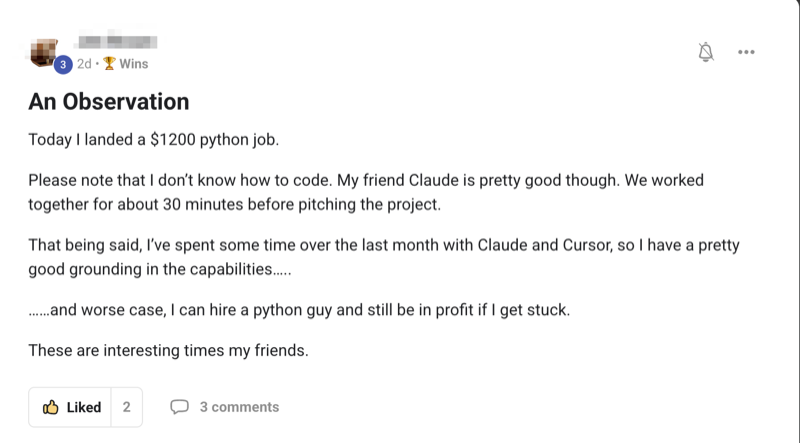
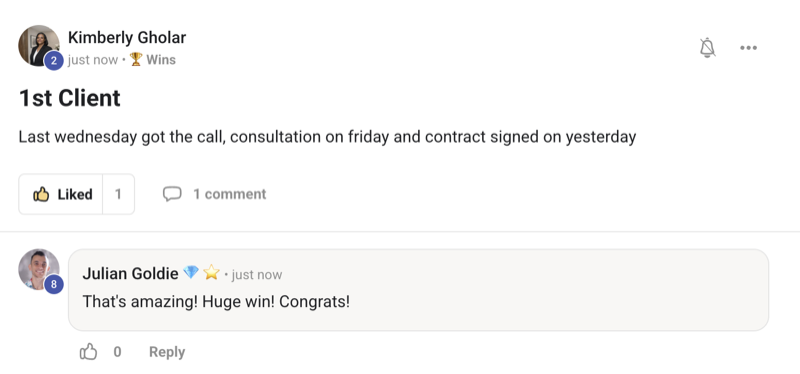
Real wins from inside the AI Profit Boardroom
See all 3,000+ members →




Ready To Join The #1 AI Community?
Join 3,600+ entrepreneurs inside the AI Profit Boardroom. Get 1,000+ plug-and-play AI agent workflows, daily coaching, and a community that holds you accountable.
Join The AI Community →7-Day No-Questions Refund • Cancel Anytime

Wait — before you leave
Get the entire AI Profit Stack for $69/mo locked
- 🎯 1,000+ done-for-you AI agent workflows
- 📅 5 live coaching calls per week with me
- 👥 3,000+ AI operators inside
- 🛡️ 7-day refund + 30-day ROI guarantee