You have heard the name, and now you want to know exactly what you are getting. The features of hermes desktop turn a single AI chat box into a proper command centre for running agents, saving your work, and remembering how you write. If you have been quietly asking what are the features of Hermes Desktop, this guide walks through every one in plain language and shows why each matters for real output rather than flashy demos.
📺 Watch: Run Hermes Desktop With Ollama for FREE
🔥 Get the Agent OS as a free bonus: AI Profit Boardroom members get the full Agent OS zip, prompt libraries, daily tutorials and weekly live coaching calls. → Get inside
Hermes is the AI agent that lives inside Julian Goldie's Agent OS. Hermes Desktop is the app you open to run it. Think of it less like a chatbot and more like a workspace where agents take on jobs, keep the files they produce, and pick up right where they left off the next morning.
What is Hermes Desktop?
Hermes Desktop is the desktop interface for the Hermes agent. It gives you one window to launch agents, watch them work, store their outputs, and connect the tools they need. Instead of copying replies out of a chat and pasting them into folders, everything happens in one place that behaves like an operating system for AI work.
That framing matters. A chatbot forgets you the moment you close the tab. An Agent OS keeps context, keeps files, and keeps running. Below are the core parts that make it tick.
The Core Features of Hermes Desktop, Explained
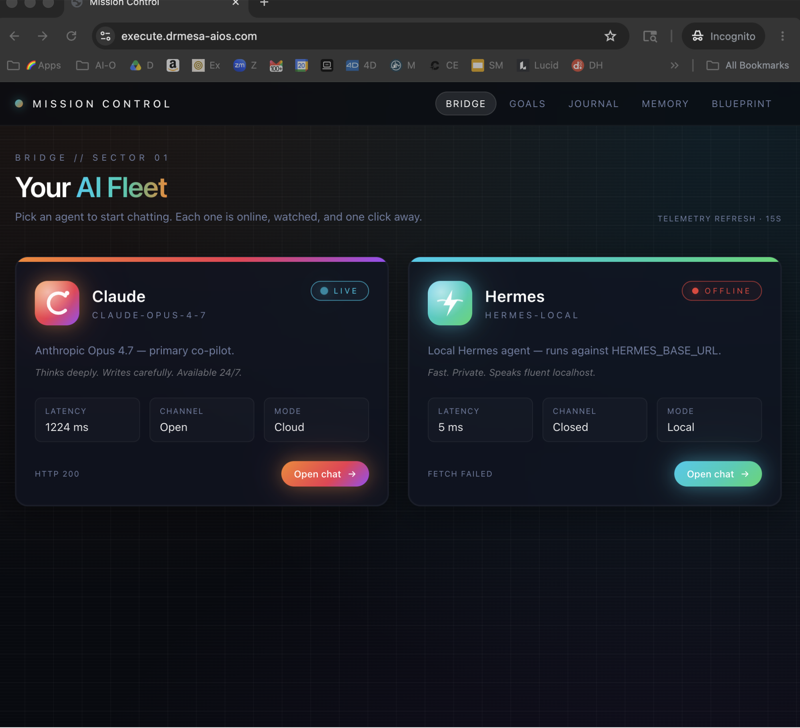
Mission control: see and launch every agent
What it is: The command centre is your home screen. From here you can see which agents exist, what each one does, and fire any of them off with a click. It is the mission-control view that sits on top of everything else.
Why it matters: Most people lose time hunting for the right prompt or tab. A single launch pad means you spend your energy on the job, not on finding where the job lives. You glance, you click, the agent runs.
The workspace: your files and outputs, saved
What it is: Every agent writes into a shared workspace. Drafts, research notes, spreadsheets, and finished pieces all land in real folders on your machine rather than vanishing into a scroll of messages.
Why it matters: Work you cannot find is work you did twice. Because outputs are saved as files, you can reopen them, edit them, hand them to a teammate, or feed them back to another agent. The workspace turns a conversation into a body of work you actually own.
Shared memory: output that sounds like you
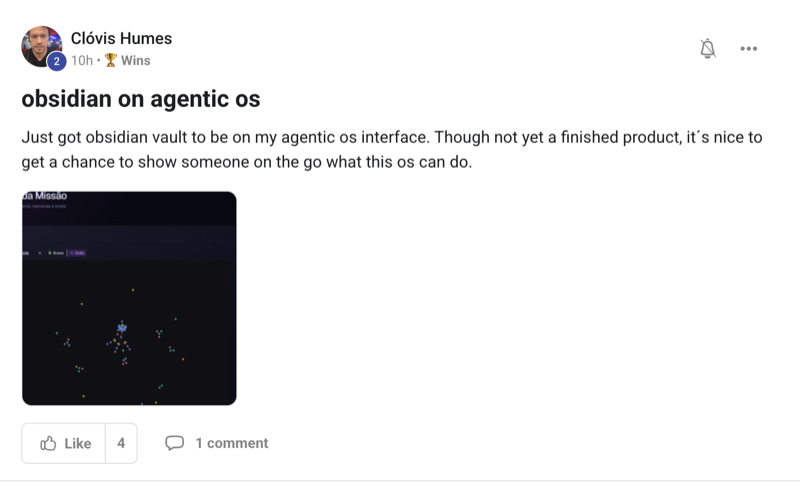
What it is: Hermes keeps a shared memory built on an Obsidian vault. You store notes about your voice, your offers, your customers, and your preferences, and every agent can read from it.
Why it matters: This is the difference between generic AI slop and content that sounds like you. When the memory holds your tone and your facts, the drafts come back closer to finished. You correct less, and the whole system gets more "you" over time instead of resetting every session.
Multi-agent orchestration: swarms that work together
What it is: Hermes can run more than one agent at once and let them hand work between each other. A research agent gathers sources, a writing agent drafts, an editing agent polishes. This is orchestration, sometimes called a swarm.
Why it matters: One agent doing everything is a bottleneck. Splitting a task across specialists mirrors how a real team operates, so bigger jobs finish faster and each step is handled by an agent tuned for it. You direct the outcome instead of micromanaging each move.
Local and API model support: run free models
What it is: Hermes Desktop works with both cloud models through an API key and local models running on your own hardware. You can point an agent at a paid frontier model, or at a free local model, depending on the task.
Why it matters: Cost and privacy. Local models run without per-token fees and keep sensitive data on your machine, which is ideal for drafting and bulk work. When you need extra horsepower, you switch to an API model for that one job. You are never locked into a single provider.
Goal mode: autonomous work in the background
What it is: Instead of prompting step by step, you can hand Hermes a goal and let it run. In this autonomous mode the agent plans, works through the steps, and keeps going in the background until the objective is met.
Why it matters: This is where AI stops being a fancy typing assistant and starts saving real hours. You set the target in the morning, walk away, and come back to progress. Long jobs no longer need you sitting there feeding the next instruction.
Integrations: tools connected through MCP
What it is: Hermes connects to outside tools using MCP, the standard that lets agents reach services such as your files, browser tasks, publishing platforms, and data sources. Each connection gives agents a new ability.
Why it matters: An agent that can only talk is limited. An agent that can browse, publish, and pull live data can actually complete the job end to end. MCP integrations are what let Hermes act in the world rather than just describe it.
📺 Watch: Hermes Desktop + Ollama is Insane (FREE!)
Hermes Desktop Features at a Glance
| Feature | What it does | Why it matters |
|---|---|---|
| Mission control | See and launch every agent from one screen | No hunting for the right prompt or tab |
| Workspace | Saves files and outputs to real folders | Work you can find, reuse, and own |
| Shared memory | Obsidian-based store of your voice and facts | Output that sounds like you, not generic AI |
| Multi-agent swarms | Runs specialist agents that hand off work | Bigger jobs finish faster |
| Local and API models | Runs free local models or paid cloud models | Lower cost and better privacy |
| Goal mode | Works autonomously in the background | Real hours saved on long tasks |
| MCP integrations | Connects agents to outside tools | Agents that act, not just chat |
📺 Watch: Hermes Desktop + Ollama is Insane (FREE!)
Who Hermes Desktop Is For
Hermes Desktop suits people who want AI to produce real output, not just answers. It fits content creators and marketers who publish often, solo founders wearing every hat, agency owners who want to scale delivery without hiring, and anyone tired of copying replies out of a chat window.
It is also a strong fit if privacy or cost matters to you, because local models let you keep work on your own machine for free. If you only ever ask one-off questions, a plain chatbot is fine. If you run repeatable work, a command centre pays off quickly.
If you want Hermes Desktop set up to make you money, check out the AI Profit Boardroom — the done-for-you Agent OS is waiting inside. → Get your Hermes command centre running
Frequently Asked Questions
Is Hermes Desktop just a chatbot?
No. A chatbot answers and forgets. Hermes Desktop runs agents, saves files to a workspace, remembers your voice through shared memory, and can work in the background. It behaves like an operating system for AI work rather than a single chat window.
Do I need to pay for a model to use it?
Not always. Hermes Desktop supports local models that run free on your own hardware, which is enough for a lot of drafting and bulk tasks. You only reach for a paid API model when a job needs extra power, so you stay in control of costs.
What makes the output sound like me?
The shared memory. It is built on an Obsidian vault where you store notes on your tone, offers, and facts. Every agent reads from that memory, so drafts come back closer to your voice and need far less rewriting.
Can it really run on its own?
Yes, through goal mode. You give Hermes an objective, and it plans and works through the steps autonomously in the background until the goal is reached. You set the direction and check the results rather than guiding every step.
Who is behind it?
Hermes and the Agent OS come from Julian Goldie, a best-selling author with more than 411,000 YouTube subscribers, a community of over 75,000 members, and 10 or more years working in SEO and AI. The tools reflect real day-to-day use, not theory.
The Bottom Line
The features of Hermes Desktop add up to one simple idea: give AI a home where it can actually get work done. Mission control launches your agents, the workspace keeps every output, shared memory makes it sound like you, swarms tackle bigger jobs, local and API models balance cost against power, goal mode runs while you rest, and MCP integrations let agents reach the tools they need.
Put together, that is the jump from asking AI questions to having AI do the work. If any single feature made you nod, the whole system is worth a proper look, because the real value shows up once these pieces run together on your own tasks.