Your real Hermes memory options come down to five decisions: where the memory lives, what gets remembered, how much of it loads each session, whether each bot keeps its own memory or shares one, and how the whole thing survives backups and vendor changes. That is the complete map — everything else you will read about Hermes memory is detail hanging off one of those five choices. I have run every sensible combination through Goldie Bench, my own testing routine for agent setups, and on this page I will walk you through each decision, tell you which way I went and why, and point you to the deeper guide for any choice you want to study properly. Think of this as the decision page: you should leave it with five boxes ticked.
📺 Watch: Hermes + Jarvis + Obsidian Memory is INSANE!
🔥 Get the Agent OS as a free bonus: AI Profit Boardroom members get the full Agent OS zip, prompt libraries, daily tutorials and weekly live coaching calls. → Get inside
Decision One: Where Your Hermes Memory Lives
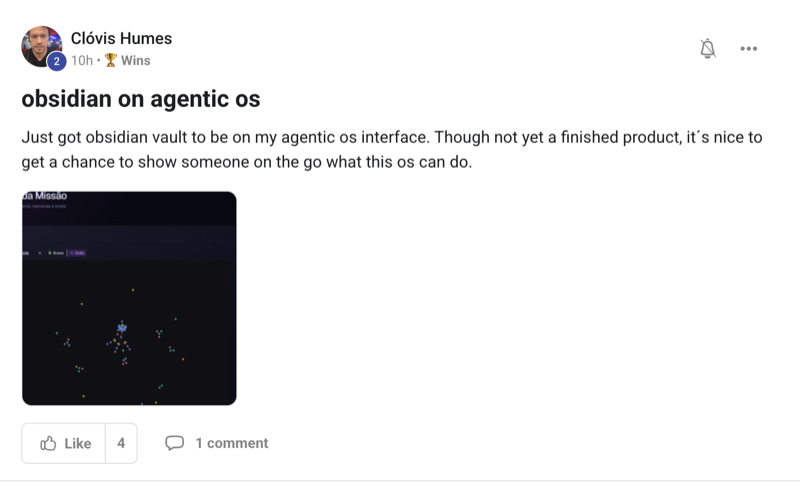
The first choice is the home. By default, Hermes keeps its memory in plain markdown files on your own machine — readable, editable, yours. The second option is pointing that memory at an Obsidian vault, the setup people call Memory Galaxy, which keeps the same local ownership but adds structure, linking and a visual way to browse what your agent knows. The third option is hosted memory: run a managed agent and the memory sits in the vendor's cloud instead of on your disk. Hosted OpenClaw through Kimi Claw is the clearest example — convenient, but your agent's memory of you lives in Moonshot's cloud, and I covered what that feels like day to day in my Kimi Claw review.
This is fundamentally an ownership and privacy trade-off. Local files mean nobody else holds what your agent knows about your business; hosted means someone else does, in exchange for zero setup. My pick: local files with a vault on top. If where the memory lives is the decision you are wrestling with, my Hermes memory provider guide takes this one question and settles it properly.
Decision Two: What Goes Into Memory — and What Stays Out
The second decision is editorial: what does your agent actually get to remember? The useful categories, in my experience, are four. Business facts — who your clients are, what you sell, how you like things done. Preferences — tone, formats, the small stylistic calls you would otherwise repeat forever. Corrections — every time you fix the agent's mistake, that fix should stick. And learned skills — Hermes can turn something it has studied into a reusable capability, the book-to-skill pattern, which is memory in its most valuable form.
Just as important is what stays out. Secrets and credentials do not belong in memory, full stop — memory gets read into context, and context travels. One-off noise does not belong either: the throwaway detail from a single task will only clutter recall later. My pick: remember business facts and corrections aggressively, preferences and skills as they prove themselves, and nothing sensitive, ever. If you want to see what Hermes actually does with each of these categories under the bonnet, my Hermes memory system guide covers the mechanics.
Quick one before the remaining three decisions: I share my full Hermes memory setup — the vault structure, what I let it remember, the backup routine, the lot — inside my free community, AI Profit Lab. If you want the working configuration rather than just the decision framework, join us there and ask me directly.
Decision Three: How Much Memory Loads Per Session
The third decision is volume. When a session starts, does your agent pull in a lean slice of relevant memory, or does it dump everything it knows into context? Dumping everything feels safer — surely more knowledge means better answers — but it is wrong on both axes that matter. On cost, agents re-read their context at every step of a task, so every remembered paragraph is paid for again and again across a long session. On quality, a context stuffed with irrelevant history gives the model more ways to latch onto the wrong thing.
Lean, relevant recall wins: load what the task needs, leave the rest on disk where it can be fetched if wanted. My pick is firmly lean loading, and it is one of the few decisions here I would call wrong-by-default the other way. I am deliberately describing this as a concept rather than quoting setting names — check the current docs for exact settings, because they move faster than the principle does. For the full arithmetic of what memory costs you in tokens, see my Hermes memory budget guide.
Decision Four: Per-Bot Memory or Shared Memory
The fourth decision only bites once you run more than one bot, but most serious Hermes users get there quickly. In bot mode, each bot keeps its own memory — your research bot remembers research things, your writing bot remembers writing things, and neither trips over the other. The Agent OS pattern adds the missing piece: a shared memory layer the whole roster can use, so the facts every bot needs — who you are, what the business is, house rules — live once instead of being duplicated and drifting apart.
Purely per-bot memory fragments your world; purely shared memory means every bot wades through every other bot's clutter, which drags you straight back into the loading problem from decision three. My pick is the hybrid: specialists with scoped memory of their own craft, plus a small shared core of business facts they all inherit.
📺 Watch: New Hermes Obsidian Memory Galaxy is INSANE!
Decision Five: How Your Memory Survives
The fifth decision is the one people skip until it hurts: what happens to all this accumulated memory over time? The good news is that exports carry memory along with your skills and config — one backup habit protects the whole setup, not just the notes. The sharper edge is durability. Local markdown files survive anything: a vendor pivoting, a service shutting, you simply changing your mind. Hosted memory does not necessarily survive any of those — it persists on the vendor's terms, and an agent that has spent a year learning your business is exactly the thing you do not want held on someone else's terms.
My pick: weekly exports, kept somewhere boring and safe, with the occasional prune of stale facts while I am in there. The ongoing upkeep side — reviewing, correcting and trimming what your agent has remembered — is its own discipline, and my Hermes memory management guide covers the routine I actually follow.
📺 Watch: Hermes3D Is INSANE: AI Agents Now Have a 3D Office
The Hermes Memory Options That Work Together
Five decisions multiply into a lot of theoretical combinations, but only three complete setups earn a recommendation from me — and choosing between whole setups is easier than choosing five options one at a time.
- The minimalist default. Local files as shipped, remember facts and corrections, lean loading, one memory for one bot, an export whenever you think of it. Zero extra moving parts. This suits beginners and anyone running a single general-purpose agent — and honestly, it is a better setup than most people ever need to leave.
- My vault build. Local files plus an Obsidian vault, all four memory categories in play, lean loading, specialist bots with scoped memory over a shared core, weekly exports. This is what I run daily. It suits operators using Hermes across a real business, and it is the setup my best memory for a Hermes agent guide builds out step by step.
- The hosted-convenience stack. A managed agent with memory in the vendor's cloud, nothing to maintain, working from your phone in minutes. It genuinely suits people who will not run anything themselves and would rather have remembered context on someone else's terms than none at all. Be honest with yourself about the trade: you are choosing convenience over ownership, and that is fine only if you choose it knowingly.
The Decision Table: Five Memory Choices at a Glance
| Decision | Your options | My pick |
|---|---|---|
| Where it lives | Local markdown files, Obsidian vault, hosted cloud | Local files plus vault |
| What is remembered | Business facts, preferences, corrections, learned skills — never secrets or one-off noise | Facts and corrections first |
| How much loads | Lean relevant recall vs everything in context | Lean, always |
| Per-bot or shared | Own memory per bot, one shared pool, or a hybrid | Scoped specialists plus a shared core |
| How it survives | Ad-hoc luck vs regular exports carrying memory, skills and config | Weekly exports |
Hermes Memory Options FAQ
Do I need an Obsidian vault to use Hermes memory?
No. The default local files work well on their own, and the minimalist setup above runs entirely on them. The vault adds structure and a way to see and browse what your agent knows — worth it once memory grows, not a prerequisite on day one.
Is hosted memory safe enough for client work?
That depends on what your clients would say about their details sitting in a vendor's cloud. It is not inherently reckless, but it is a disclosure and comfort question, not just a technical one. I keep client-related facts in local memory only, and I would advise the same.
Can I change my memory options later without starting over?
Mostly, yes — and this is a quiet argument for starting local. Files move anywhere, so upgrading from the minimalist default to a vault build is painless. Going from hosted back to local is the awkward direction, because you only get what the vendor's export gives you.
What should never go into Hermes memory?
Secrets, credentials, and anything you would not want repeated back in an unexpected context. Memory is read into working context by design, so treat it as somewhere information circulates, not somewhere it hides. Keep one-off trivia out too — it is noise, not knowledge.
Verdict: The Five Choices, Made
My honest read on the Hermes memory options is that the five decisions look intimidating and mostly are not: local files with a vault, remember business facts and corrections, load lean, give specialists their own memory over a shared core, and export weekly. Four of the five have answers I would give almost anyone; only the hosted-versus-local call genuinely depends on who you are. Make the five choices once, deliberately, and Hermes memory stops being a topic you think about — which is exactly the point of giving an agent memory in the first place.
Want the setup done for you? Inside AI Profit Lab I share the exact memory files, vault template and export routine behind my own build — it is free to join, and you can ask me questions directly. Bring these five decisions, leave with all of them made.