Ling 3.0 Flash is a brand-new, completely free Chinese AI model, and it might be one of the most capable free models you can plug into your AI stack right now. Julian Goldie has been testing it hands-on, and the short version is this: it is fast, it is free, and every single build he threw at it actually worked.
📺 Watch: Ling 3.0: New FREE Chinese AI!
🔥 Get the Agent OS as a free bonus: AI Profit Boardroom members get the full Agent OS zip, prompt libraries, daily tutorials and weekly live coaching calls. → Get inside
In this guide, we will cover what the model is, what the benchmarks claim (and why you should be sceptical), the three ways to use it for free, and exactly how it performed in Julian's own real-world testing.
What Is Ling 3.0 Flash?
Ling 3.0 Flash is a mixture-of-experts (MoE) model. Rather than firing every parameter on every request, it routes each token through a small slice of the network. That design is what makes it quick and cheap enough to give away. The headline specs:
- 124 billion total parameters
- 5 billion active parameters per token
- Roughly 250K context window
- Free API access on OpenRouter, plus free use through Hermes and Kilo Code
The Ling team make a bold efficiency claim about it. According to them, with 1/8 of the total parameters and 1/12 of the active parameters, Ling 3.0 Flash matches or beats their own 1-trillion-parameter flagship model on most benchmarks. That is their claim rather than an independent audit, but if it holds up, it says a lot about how far mixture-of-experts efficiency has come.
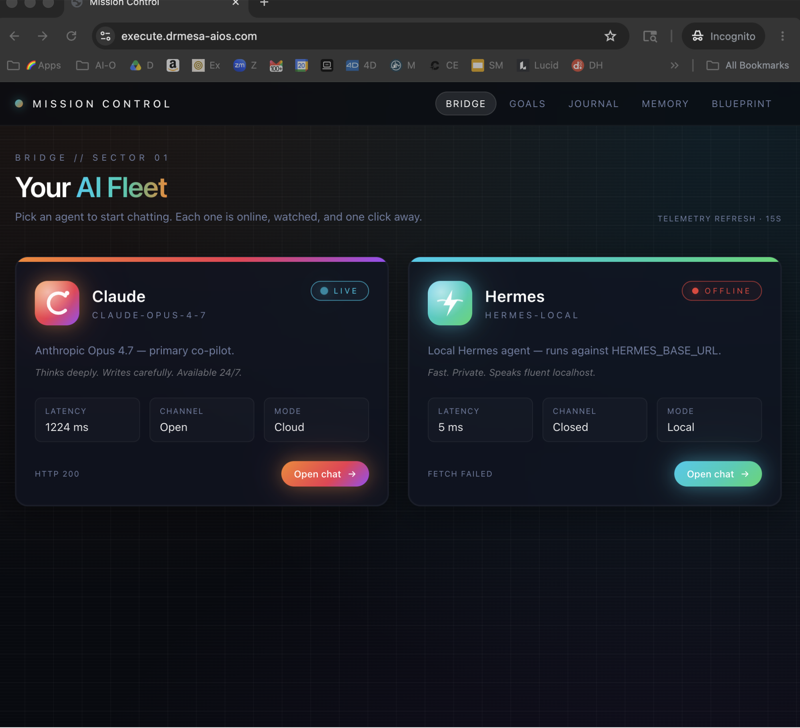
It is also genuinely fast to respond, and it is already popular. People are running it inside Kilo Code, the Hermes agent, Claude Code, OpenClaw and other agentic tools, which tells you the developer community sees something worth using here.
Ling 3.0 Flash Benchmarks: Big Claims, One Big Caveat
According to reported benchmark results, Ling 3.0 Flash outperforms DeepSeek V4 Flash on some tests, and it beats ChatGPT on a handful of others, including SWE multilingual, terminal bench and wide search.
Those are the reported numbers, and they are worth knowing. But Julian's advice here is blunt: never just believe benchmarks. Labs tend to highlight the tests where their model shines, and a leaderboard win does not automatically translate into better output for your specific workflow. Always test the model yourself on the tasks you actually care about.
Which is exactly what he did.
How Julian Tested It: One-Shot Build Challenges
Rather than relying on leaderboards, Julian ran the model through Goldie Bench, his own hands-on testing framework built around practical, one-shot challenges. The idea is simple: give the model the kind of prompt a real business owner would use, then judge what comes out with no cherry-picking.
Test 1: One-Shot SEO Agency Website
The first prompt was "create a beautiful website for an SEO agency". One shot, no follow-ups, no fixes.
The result was genuinely decent. The navigation links actually worked, the structure made sense, and the page held together as a real site rather than a broken demo. The testimonials were generic placeholders, which is what you would expect from a one-shot build, but as a starting point it was solid.
Test 2: One-Shot Habit-Tracker App
Next, Julian asked for a habit-tracker app in a single prompt. Ling 3.0 Flash delivered a fully functional app first time.
For comparison, he ran the same challenge with GPT-5.6 Sol. Sol's version looked nicer on the front end, but both apps worked, and in Julian's words there was "not a huge difference" between them. Keep in mind that one of these models costs money and the other is completely free.
Test 3: Calorie-Tracker App in Kilo Code
Finally, Julian built a calorie-tracker app inside Kilo Code, entirely free, using Ling 3.0 Flash as the engine. The verdict from his testing: the front end was not great, but the back end was good and the app worked.
The Goldie Bench Verdict
Across all three tests, every single output worked. That is the headline finding from Julian's Goldie Bench runs, and for a free model it is impressive.
The consistent weak spot is front-end design. Ling 3.0 Flash builds functional things that look average out of the box. Julian's fix is not to abandon the model but to teach it better taste: pair it with a design skill like Hallmark, a free open-source anti-AI-slop design skill, and you close the gap between "it works" and "it works and looks great".
📺 Watch: Claude Opus 4.8 + Gemini 3.5 Flash Is INSANE!
Three Ways to Use Ling 3.0 Flash for Free
There are three free routes into the model right now, and each suits a different kind of user.
| Access Route | How It Works | Best For |
|---|---|---|
| OpenRouter | Free API access to Ling 3.0 Flash | Plugging the model into your own tools, scripts and apps |
| Hermes | Free through the News Portal free plan inside the Hermes agent | Agentic work: research, building skills, running automations |
| Kilo Code | Select the model free inside Kilo Code | Building websites and apps end to end |
Setting It Up in Hermes, Step by Step
- Open your terminal and launch Hermes.
- Go to select the Hermes model.
- Choose News Portal and log in.
- Pick the free plan.
- Select Ling 3.0 Flash from the list of free models.
Once it was connected, Julian tested the /learn command. Hermes fetched a guide and built a working skill from it quickly, with the free model doing the heavy lifting.
That combination matters more than it might sound. Hermes is the agent at the heart of Agent OS, and free models like Ling 3.0 Flash are exactly what make it viable to run an always-on agent setup without burning through API credits. When the underlying model costs nothing, you can let your agents run all day.
📺 Watch: Hermes + DeepSeek V4 Flash is WILD (FREE)
Beyond Coding: MCPs, Research and Office Work
Ling 3.0 Flash is not limited to writing code. It can connect to MCPs, which means it can drive external tools directly. The Ling team have demoed it working with the Blender MCP to create 3D models, which is a strong signal for anyone building agent workflows that reach outside the chat window.
It is also supposed to be good at research and office work: the kind of summarising, drafting and analysis tasks most people actually spend their day on. Combine that with the roughly 250K context window and you have a general-purpose workhorse rather than a coding-only model, although as always, run your own tests before trusting it with anything important.
Why a Free Model Like This Actually Matters
It is easy to shrug at yet another model release. Here is why this one is worth your attention: the cost of experimenting just dropped to zero.
Most people never build the website, the app or the automation they keep talking about because they worry about burning money on API calls while they learn. With a free model that passes real-world tests, that excuse disappears. You can prototype an entire business idea, fail five times and succeed on the sixth, and pay nothing for the privilege.
If you want to make money with free AI models like Ling 3.0 Flash, check out the AI Profit Boardroom — inside you get weekly live calls with Julian Goldie, plug-and-play AI systems and prompts, and a community of members turning agents and automations into real income. → Turn free models into paid projects with the AI Profit Boardroom
Ling 3.0 Flash FAQ
Is Ling 3.0 Flash really free?
Yes. You get free API access on OpenRouter, free use through the News Portal free plan inside Hermes, and free use inside Kilo Code. Three routes, no payment required.
How big is the context window?
Roughly 250K tokens, which is enough to hold large codebases, long documents or extended agent sessions in a single conversation.
Is it better than ChatGPT?
On some reported benchmarks, such as SWE multilingual, terminal bench and wide search, yes. In Julian's own Goldie Bench testing, GPT-5.6 Sol still produced nicer front ends, but the functional gap was small. The honest answer is that it depends on your task, so test both.
What tools does it work with?
It is already being used with Kilo Code, the Hermes agent, Claude Code, OpenClaw and other agentic tools, and it can connect to MCPs such as the Blender MCP for 3D model creation.
What is its biggest weakness?
Front-end design. In Julian's testing, everything worked, but the visuals were average out of the box. Pairing it with a free design skill like Hallmark is the recommended fix.
The Bottom Line
Ling 3.0 Flash is a fast, free mixture-of-experts model with 124 billion parameters, a roughly 250K context window and some eye-catching claims behind it, including the Ling team's statement that it rivals their 1-trillion-parameter flagship with a fraction of the parameters.
More importantly, it passed the test that matters. In Julian's hands-on Goldie Bench runs, every build worked: a one-shot SEO agency website, a one-shot habit tracker and a calorie tracker in Kilo Code. The front end needs help from a design skill like Hallmark, but the engine underneath is genuinely capable.
If you have been waiting for a no-risk way to start building with AI agents, this is it. Load it up in OpenRouter, Hermes or Kilo Code, give it a real project, and judge it the way Julian does: by what it actually ships.