Grok 4.7 undercuts GPT-6 Sol on output price — $6 against $10 per million tokens — while GPT-6 Sol doubles the context window at 1,050,000 tokens against Grok's 500,000, so the Grok 4.7 vs GPT-6 Sol choice comes down to this: take Grok 4.7 for output-heavy coding and agent runs where token bills stack up, and take GPT-6 Sol when you need enormous context, web and file search built in, or you already live inside ChatGPT, Codex or GitHub Copilot. Both models landed in the same 24-hour window — xAI released Grok 4.7 on 21 September 2026, and OpenAI announced GPT-6 Sol on 22 September 2026 — which is exactly why this comparison matters right now.
📺 Watch: Grok 4.7 + Hermes Agent is SCARY GOOD!
🔥 Get the Agent OS as a free bonus: AI Profit Boardroom members get the full Agent OS zip, prompt libraries, daily tutorials and weekly live coaching calls. → Get inside · Want AI SEO help 1-on-1? Book a free SEO strategy session →
Everything below comes from the official releases: the xAI announcement of Grok 4.7 dated 21 September 2026, xAI's developer release notes, OpenAI's model documentation for GPT-6 Sol, OpenAI's launch announcement of 22 September 2026, and the GitHub changelog entry of the same date. Where a number is a vendor's own benchmark claim, it is labelled as exactly that.
Grok 4.7 vs GPT-6 Sol: The Head-To-Head Specs
Start with what each vendor actually shipped. Grok 4.7 is positioned by xAI as its "most powerful model for coding and knowledge work", trained with a longer reinforcement learning run on a harder mix of tasks, with better self-verification on longer-running coding jobs. GPT-6 Sol is one of two models OpenAI released the following day — the other being the budget-tier GPT-6 Luna — and, per OpenAI's announcement, both "build on the advances behind GPT-6 Astra", the flagship that arrived earlier in September 2026.
| Spec | Grok 4.7 | GPT-6 Sol |
|---|---|---|
| Released | 21 September 2026 | 22 September 2026 |
| Context window | 500,000 tokens | 1,050,000 tokens |
| Max output | No stated text output limit | 128,000 tokens |
| Input price / 1M | $2 (up to 200k prompt tokens) | $2 |
| Output price / 1M | $6 (up to 200k prompt tokens) | $10 |
| Cached input / 1M | $0.50 | $0.20 |
| Inputs | Text and images | Text and images |
| Reasoning control | low, medium, high (default), xhigh | none, low, medium (default), high, xhigh, max |
| Knowledge cutoff | Not stated in release notes | 20 April 2026 |
All figures are taken from xAI's developer release notes and OpenAI's model documentation as published this week. Two asymmetries jump out immediately: GPT-6 Sol carries more than double the context, and Grok 4.7 charges 40% less for output tokens — as long as your prompt stays under 200,000 tokens, which is where xAI's pricing steps up.
If you want working agent systems that put models like these to profitable use — not just spec sheets — check out the AI Profit Boardroom → Get the full agent stack. Prefer 1-on-1 help with AI SEO? Book a free SEO strategy session and get a plan for your site.
Pricing: Where Grok 4.7 And GPT-6 Sol Actually Cost You
On paper both models charge $2 per million input tokens, but the details diverge fast. Grok 4.7's pricing is tiered by prompt size: up to 200,000 prompt tokens you pay $2 input, $0.50 cached input and $6 output per million; above 200,000 prompt tokens those rates double to $4, $1 and $12, per xAI's developer release notes. GPT-6 Sol keeps a flat $2 input, $0.20 cached input and $10 output per million across its full 1,050,000-token window, per OpenAI's model documentation.
That structure changes which model is cheaper depending on your workload. For output-heavy jobs on modest prompts — code generation, long drafts, agent loops that write more than they read — Grok 4.7's $6 output rate wins. For workloads that hammer the same large context repeatedly, GPT-6 Sol's $0.20 cached input rate is less than half Grok 4.7's $0.50, and there is no price cliff at 200,000 tokens. Worth noting for context: OpenAI says Sol and Luna launched at API prices 50% lower than their GPT-5.6 counterparts' promotional pricing, and the ultra-cheap GPT-6 Luna sits at $0.10 input and $0.50 output per million if your task does not need a flagship at all.
Coding And Agentic Work: What The Vendors Claim
There is no like-for-like public benchmark table covering both models yet, so treat each side's numbers as vendor claims rather than a settled verdict. xAI's announcement reports Grok 4.7 scoring 46.3% on CursorBench 4.0, 71.0% on DeepSWE v1.1, 64.0% on EEBench and 56.7% on HealthBench Professional, and says the model matches Grok 4.6 on price and speed while improving longer-running coding tasks and self-verification. OpenAI has not published equivalent scores for GPT-6 Sol in its launch materials; the GitHub changelog describes Sol as "a balanced model for interactive and agentic coding" and "a strong all-round choice for development tasks that benefit from careful, multistep validation".
For independent, hands-on comparisons of how frontier brains behave inside real agent workflows, the Goldie Bench write-up covers how these models get tested against each other in practice — that is the better place for head-to-head judgement calls than two vendors' own launch decks.
📺 Watch: GPT-6 Sol + Luna Just Changed AI Agents
Context, Reasoning Controls And Tooling
GPT-6 Sol's 1,050,000-token context window is the headline spec difference — more than double Grok 4.7's 500,000 tokens — and it pairs with a 128,000-token output cap and a 20 April 2026 knowledge cutoff, per OpenAI's model documentation. Sol also ships with web search, file search, structured outputs, function calling and prompt caching supported natively, and takes image input alongside text.
Grok 4.7 counters with its own strengths: text and image inputs, no stated limit on text output, and a reasoning effort dial that defaults to high — xAI exposes low, medium, high and xhigh settings. GPT-6 Sol's dial runs wider, from none (which is also the mode required for function calling via Chat Completions) up to max, with medium as default. If your agent pipeline depends on cranking reasoning up only when a task deserves it, both models now give you that lever; GPT-6 Sol simply has more notches on it.
Availability: Where You Can Run Each Model
Grok 4.7 is live on the xAI API as grok-4.7 and available through Cursor, Grok Build, third-party coding harnesses and model routers, per the xAI announcement. One wrinkle: the speed-tuned Grok 4.7 Fast variant — the faster option xAI prices at double the standard rate — is exclusive to Cursor and Grok Build rather than the public API.
GPT-6 Sol is on the OpenAI API as gpt-6-sol, in ChatGPT and Codex for Plus, Pro, Business, Enterprise and Edu users, and in GitHub Copilot for Pro+, Max, Business and Enterprise plans across Visual Studio Code, JetBrains, Xcode and the Copilot CLI, per OpenAI's announcement and the GitHub changelog of 22 September 2026. And if you run agents rather than chat windows, Hermes Agent v0.21.5 — released 24 September 2026, per its official release notes — added support for the GPT-6 models and Claude Opus 5.5, so both sides of this comparison now slot into the same harness; the Hermes GPT-6 guide covers that setup, and the broader Agent OS resource shows how a model choice fits into a full agentic operating system rather than a one-off chat.
Which One Should You Pick?
Decide by workload, not by brand loyalty:
- Pick Grok 4.7 if you generate far more than you read — code, long-form output, agent loops — and your prompts stay under 200,000 tokens. The $6 output rate is the cheapest flagship-tier output of the two by a clear margin.
- Pick GPT-6 Sol if you need the 1,050,000-token context, built-in web and file search, or delivery through ChatGPT, Codex and Copilot seats your team already pays for. The $0.20 cached input rate also favours repeated big-context work.
- Pick neither for high-volume simple tasks — GPT-6 Luna at $0.10 input per million exists precisely so you stop burning flagship tokens on lightweight jobs.
Whichever way you go, the model is the smallest part of the system. The picks in the best Hermes agent LLM roundup and the best AI agents for coding guide show the same pattern again and again: workflow design and memory beat raw model choice for real-world output.
Grok 4.7 vs GPT-6 Sol FAQs
Is Grok 4.7 cheaper than GPT-6 Sol?
For output, yes: $6 against $10 per million tokens at standard prompt sizes. For cached input, no: GPT-6 Sol's $0.20 beats Grok 4.7's $0.50 per million, and Grok's rates double once a prompt passes 200,000 tokens. Match the pricing shape to your workload before deciding.
Which has the bigger context window?
GPT-6 Sol, at 1,050,000 tokens against Grok 4.7's 500,000, per each vendor's official documentation. If entire-codebase or archive-scale context is the job, Sol holds twice as much.
What about GPT-6 Sol vs GPT-6 Luna?
That is a different decision — flagship capability against a model priced 20 times cheaper on input. The GPT-6 Sol vs GPT-6 Luna comparison covers that trade-off in full.
Can agents use both models together?
Yes. Multi-model harnesses route tasks to different brains, and Hermes Agent's v0.21.5 release supports GPT-6 models alongside Grok via routers. The Hermes agentic operating system guide and the Hermes workspace overview show how one workspace can drive several models on one task queue.
Verdict
Grok 4.7 vs GPT-6 Sol is genuinely close, which is itself the story of late September 2026: two frontier releases inside 24 hours, both at $2 input per million, each betting on a different bottleneck. xAI bet you care most about output cost and coding depth; OpenAI bet you care most about context size, built-in tooling and distribution. Price out one week of your real token usage against the tables above — the right answer will usually declare itself in the arithmetic.
If you want to turn model releases like these into actual income systems — agents, workflows and the community running them daily — check out the AI Profit Boardroom → Join the operators inside. And if you want a personal roadmap first, book a free SEO strategy session — bring your site, leave with a plan.
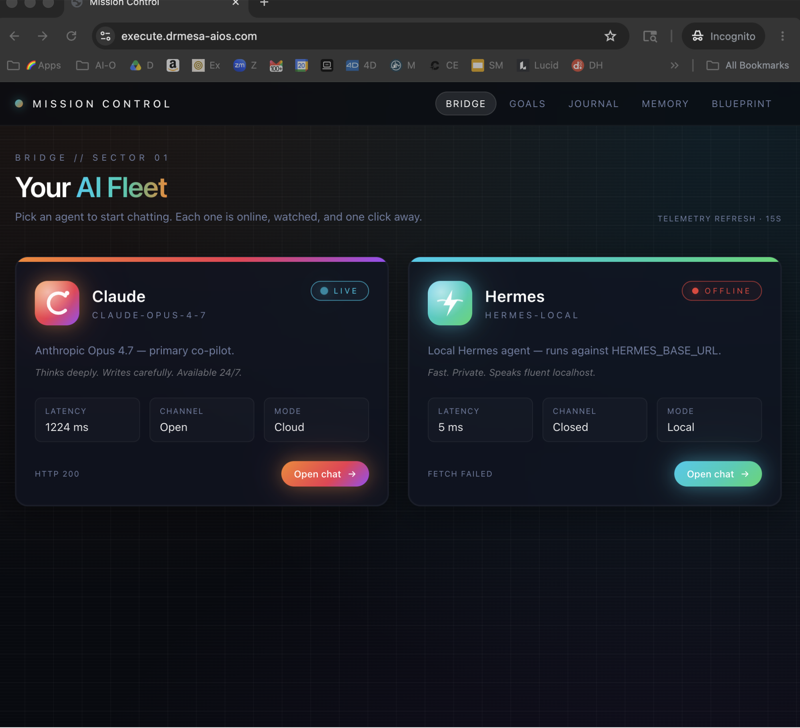
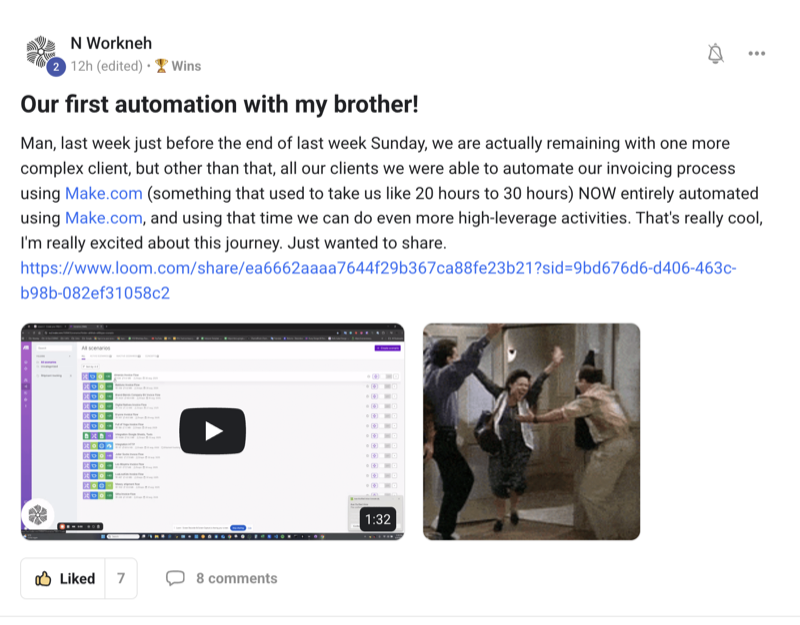
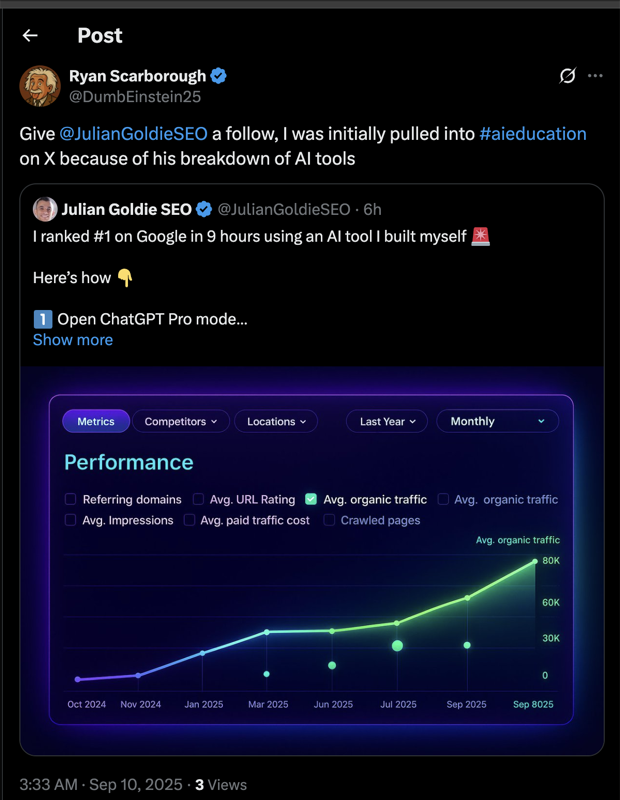
Real wins from inside the AI Profit Boardroom
See all 3,000+ members →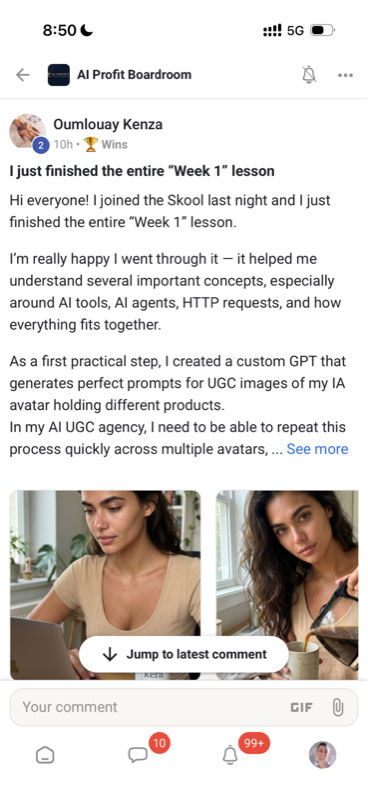
Ready To Join The #1 AI Community?
Join 3,600+ entrepreneurs inside the AI Profit Boardroom. Get 1,000+ plug-and-play AI agent workflows, daily coaching, and a community that holds you accountable.
Join The AI Community →7-Day No-Questions Refund • Cancel Anytime
Wait — before you leave
Get the entire AI Profit Stack for $69/mo locked
- 🎯 1,000+ done-for-you AI agent workflows
- 📅 5 live coaching calls per week with me
- 👥 3,000+ AI operators inside
- 🛡️ 7-day refund + 30-day ROI guarantee