So, is Hermes Agent safe? The short answer: Hermes Agent is as safe as you configure it to be — and the two most recent releases have materially raised the floor, adding write-approval protection for agent instruction files, a deep redaction sweep that scrubs secrets from errors and logs, OS-keychain encryption for stored credentials, and consent gates on profile browsing. It is an open-source project whose code anyone can audit, and its memory lives in plain files on your own machine rather than on someone else's servers. But it is also an autonomous agent that can run commands, browse the web and message other agents — so the honest safety story is half what the software does, and half what you let it do. This guide covers both halves, with every product claim sourced from the official Hermes Agent release notes on GitHub.
📺 Watch: Hermes Agent Can Now Browse the Web as YOU
🔥 Get the Agent OS as a free bonus: AI Profit Boardroom members get the full Agent OS zip, prompt libraries, daily tutorials and weekly live coaching calls. → Get inside · Want AI SEO help 1-on-1? Book a free SEO strategy session →
Is Hermes Agent Safe? The Honest Answer
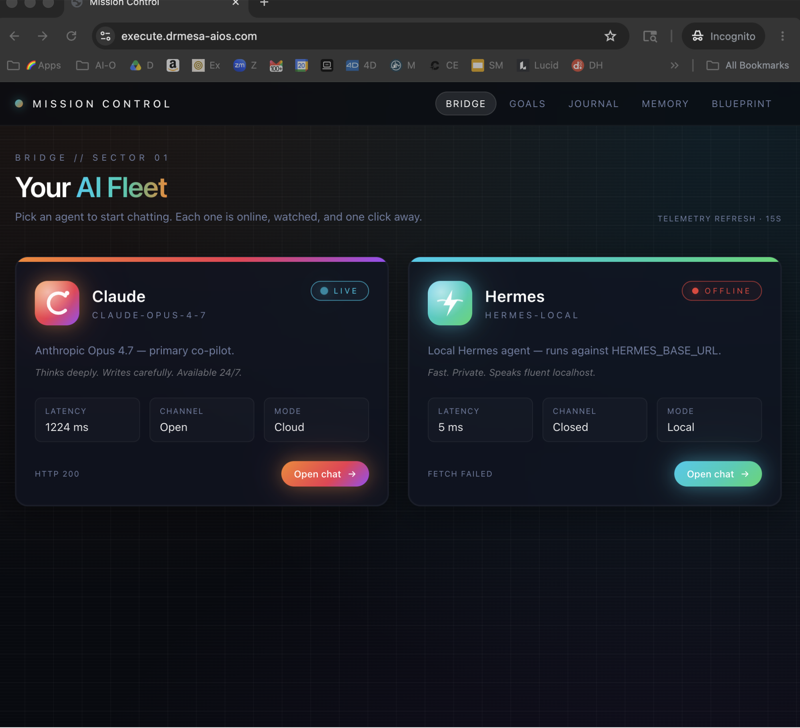
Start with what Hermes Agent actually is, because the safety question depends on it. Hermes is an open-source AI agent from Nous Research that runs on your own machine, holds persistent memory, executes tools and — since the v0.21.0 release on 31 August 2026 — runs whole rosters of named bots that can message each other and operate a browser. That is a fundamentally different risk profile from a chatbot in a web page. A chatbot can say something wrong; an agent can do something wrong.
The trust equation has three parts:
- Can you verify what it does? Yes — the code is open source on GitHub, and its memory is human-readable markdown files on your own computer. You can open the files and read exactly what your agent knows and believes at any time. Nothing about its state is a black box on a vendor's server.
- Does the software protect you from itself? Increasingly, yes — the last two releases were heavy on hardening, detailed below.
- Does it protect you from your own configuration? Only partly. An agent you grant broad shell access and live credentials will use them. That part of the safety story is yours to manage, and this guide covers the settings that matter.
If you want to run agents safely from day one — with vetted setups, prompt libraries, daily tutorials and weekly live coaching calls instead of trial and error — check out the AI Profit Boardroom → get the safe-setup playbook inside. Want 1-on-1 help with your AI SEO stack? Book a free SEO strategy session.
What the Recent Releases Changed for Security
Two releases in late August 2026 did most of the recent hardening, and both are documented in the official release notes on GitHub.
Version 0.21.0 (31 August 2026) shipped two security changes alongside its headline features. First, protected agent-instruction files now require write approval — meaning an agent cannot silently rewrite the files that define its own behaviour. That closes off one of the classic agent failure modes, where a task gone wrong (or a malicious page an agent reads) ends up editing the instructions the agent runs on. Second, the release includes what the notes describe as a deep redaction sweep for secrets in errors and logs, so API keys and credentials are scrubbed rather than leaking into log files that later get pasted into bug reports or shared debugging sessions.
Version 0.20.6 (27 August 2026) laid the groundwork with three changes worth knowing. Secrets gained OS-keychain encryption, so stored credentials sit in your operating system's secure store rather than plaintext config. Profile browsing became consent-gated — relevant because Hermes can now drive a browser with your logged-in profile, and that capability now asks before it acts. And managed SSH remote updates tightened how remote setups are maintained.
The pattern across both releases is the right one: as Hermes gains more powerful capabilities — the browser driver, bot-to-bot messaging, scheduled jobs — the project has been adding approval gates and secret hygiene in the same releases. Capability and containment are moving together, which is exactly what you want to see from a tool you are trusting with real access.
The Risks You Still Own
None of the above makes an autonomous agent risk-free, and it would be dishonest to pretend otherwise. Here is where the residual risk actually lives, and what to do about each piece.
Tool access is the blast radius. An agent with shell access can run commands; an agent with your browser profile can act as you on the web, as covered in the Hermes desktop browser guide. The practical rule: grant the narrowest access that gets the job done, and keep approval prompts on for anything that writes, spends or publishes. Treat granting a tool the way you would treat giving a new hire system access — role by role, not everything on day one.
Untrusted content is the attack surface. When an agent reads web pages, emails or documents, it is reading text that someone else wrote — and that text can try to talk your agent into doing things. The v0.21.0 write-approval change on instruction files exists precisely because of this class of problem. Your side of the defence: be deliberate about which sources agents ingest, and keep high-risk capabilities behind approvals so a manipulated agent still cannot act unilaterally.
Credentials deserve compartments. With keychain encryption and log redaction now built in, the remaining discipline is scope: give agents their own API keys where services allow it, rather than your master credentials, so anything that goes wrong is revocable in one place.
Scheduled and multi-agent autonomy compounds everything. A Hermes cron job runs without you watching, and in bot mode group chats agents hand work to each other. Both are the point of the product — but they multiply whatever access decisions you made. Set your permissions as if you will not be looking, because eventually you will not be.
| Safety layer | What Hermes provides | What you control |
|---|---|---|
| Code transparency | Open source, auditable on GitHub | Whether you update promptly |
| Memory | Plain markdown files on your machine | What you let it store |
| Instruction files | Write approval required (v0.21.0) | Reviewing what you approve |
| Secrets | OS-keychain encryption, log redaction | Scoping keys per agent |
| Browser | Consent-gated profile browsing | Which sites and profiles you allow |
| Tools | Approval prompts | Which tools you grant at all |
How Hermes Compares on Safety
Relative to the rest of the open agent field, Hermes sits at the transparent end. Its two structural advantages are auditability — open code, plus memory you can literally read in a text editor — and locality, since your data and context files live on your machine rather than a hosted platform. Hosted agent products ask you to trust a vendor's infrastructure; local open-source agents ask you to trust your own configuration. Neither is automatically safer, but they fail differently, and with Hermes the failure modes are at least inspectable.
If you are weighing platforms, the Hermes vs OpenClaw comparison covers how the two open-source harnesses differ in architecture, and the Goldie Bench write-up covers how the underlying model brains stack up in hands-on tests — worth reading because the model you connect shapes agent judgement, and judgement is itself a safety property. For structuring permissions across a whole roster of agents, the Agent OS approach treats access control as a first-class part of the build rather than an afterthought, which is the mindset that keeps multi-agent setups boring in the best way.
Is Hermes Agent Safe? FAQs
Is Hermes Agent safe to install?
The project is open source and installed from the official GitHub repository, so the code you run is publicly auditable. As with any software that gets system access, install from the official source only, and keep it updated — recent releases have shipped meaningful security hardening, so staying current is itself a safety practice.
Can Hermes Agent leak my API keys?
The recent releases specifically target this: secrets gained OS-keychain encryption in v0.20.6, and v0.21.0 added a deep redaction sweep that scrubs secrets from errors and logs, per the official release notes. Your remaining job is scoping — dedicated, revocable keys per agent rather than master credentials.
Can an agent change its own instructions?
Not silently. As of v0.21.0, protected agent-instruction files require write approval, so changes to the files that govern agent behaviour need your sign-off.
Is it safe to let Hermes browse with my logged-in profile?
Profile browsing is consent-gated as of v0.20.6, so it asks before acting. Whether to grant that consent depends on the task: read-only research on trusted sites is a very different risk from letting an agent act as you on accounts that can spend money or publish publicly. Grant it narrowly.
Is Hermes Agent safe for business use?
Yes, provided you treat it like any system with real access: least-privilege tool grants, scoped credentials, approvals on consequential actions, and prompt updates. Its file-based, local-first design means your business context stays on infrastructure you control, which for many businesses is the deciding factor.
Verdict: Safe Enough to Run Real Work — If You Set It Up Like You Mean It
Hermes Agent in September 2026 is a meaningfully safer product than it was even a month ago: approval-gated instruction files, redacted logs, keychain-encrypted secrets and consent-gated browsing are exactly the protections an autonomous agent should ship with, and they arrived alongside the capabilities that made them necessary. The remaining risk is configuration, not mystery — you can read the code, read the memory and read the release notes. Set narrow permissions, scope your keys, keep approvals on for anything consequential, and Hermes is safe enough to trust with genuine business workflows.
If you want your agent roster built on safe defaults from day one — permissions, memory and workflows that will not bite you later — check out the AI Profit Boardroom → see the full setup inside AIPB. Prefer to talk through your AI SEO plans 1-on-1? Book a free SEO strategy session.