OpenClaw now learns skills from your conversations and shows you what it is learning as it happens — visible OpenClaw skill learning shipped in the 2026.9.4 release on 11 September 2026, alongside plugin and skill discovery, according to the official OpenClaw release notes. In plain terms: instead of you writing every skill by hand or hunting through a marketplace, the agent can now notice a repeatable way of working inside your chats, surface it as a learned skill you can inspect, and help you find the plugins and skills you are missing. It is one of the most consequential changes OpenClaw has shipped this year, and it arrived in a release measuring 1,558 pull requests from 294 contributors.
📺 Watch: New OpenClaw Upgrades are INSANE!
🔥 Get the Agent OS as a free bonus: AI Profit Boardroom members get the full Agent OS zip, prompt libraries, daily tutorials and weekly live coaching calls. → Get inside · Want AI SEO help 1-on-1? Book a free SEO strategy session →
OpenClaw Skill Learning: What Changed In 2026.9.4
The 2026.9.4 release notes list a cluster of features that belong together. The headline pair is plugin and skill discovery — the platform can now help you find capabilities rather than expecting you to know their names — and visible skill learning from conversations, which is the part that changes how you work day to day. The same release adds cloud worker controls, GPT Image 2.5 support and terminal-based questions, plus a set of quality-of-life upgrades: a message navigator for long conversations, quoting text directly into drafts, improved file browsing with search, and native Codex subagent transcripts so you can see what helper agents actually did.
The word that matters most in the notes is visible. Agent products have quietly adapted to users for a while, but OpenClaw is putting the learning where you can see it — you watch skills form from the conversations you are already having. That transparency is what makes the feature trustworthy enough to use for real work: you can check what the agent picked up, keep what is right and discard what is not.
How OpenClaw Skill Learning Works With Memory
Skill learning sits on top of OpenClaw's memory behaviour, and 2026.9.4 tightens that too. Per the release notes, the system now requires distinct recall queries before promoting notes to long-term storage — meaning a stray remark in one chat does not become permanent behaviour; the agent has to actually need the same information again before it graduates. The release also handles temporary provider limits more gracefully, so a rate-limited model no longer derails the memory pipeline. Together those changes make what the agent learns more deliberate: repeated, genuinely useful patterns get kept, one-off noise gets dropped.
This is the same design philosophy showing up across the agent world — persistent, inspectable capability that compounds — and it is why skills are becoming the unit of value in agent platforms. If you want the comparison view, the best Hermes agent skills guide shows how the rival ecosystem approaches the same idea, with skills as files you curate rather than behaviours the agent proposes.
If you want an agent that gets smarter every week you use it — with a library of proven skills and workflows to load in on day one — check out the AI Profit Boardroom → get the full skill library inside. Rather map out your AI plan 1-on-1 first? Book a free SEO strategy session and get a personal walkthrough.
Skill Workshop, Collections And The 2026.9.3 Groundwork
The skill-learning push did not start with 2026.9.4. Three days earlier, the 2026.9.3 release of 8 September 2026 shipped Skill Workshop enhancements for persistent agent-owned collections — the storage layer where an agent keeps and organises the skills it holds. That release also made updates themselves safer, with isolated candidate state validation, and preserved warm prompt caches so cold-session updates waste less work. Read in sequence, 2026.9.3 built the shelves and 2026.9.4 taught the agent to put things on them: collections give learned skills somewhere durable to live, and discovery gives you a way to find them again.
For teams, the same September releases added provider account management in the Models settings, a searchable meeting library with transcript search, and an optional Team Reports plugin covering GitHub activity and Discord discussions — the kind of features that signal OpenClaw is chasing group and community workflows, not just solo users. That direction matters if you are deciding where to invest your learning time; the OpenClaw roadmap breakdown tracks where the project has said it is heading.
What Else Shipped Around The Skill Learning Update
Two other September releases give the context. Here is the month so far, dated from the official release pages:
| Release | Date | What it brought |
|---|---|---|
| 2026.9.3 | 8 September 2026 | Skill Workshop persistent collections, safer updates, warm cache preservation, native Mac tabs |
| 2026.6.35 LTS | 10 September 2026 | Final June Extended Stable release: safer provider and channel boundaries, reliable long-running delivery |
| 2026.9.4 | 11 September 2026 | Visible skill learning, plugin and skill discovery, cloud worker controls, GPT Image 2.5, terminal questions |
The staggered dates tell you something about how OpenClaw ships. The June Extended Stable line kept receiving reliability work right up to its final release on 10 September, so teams who cannot chase monthly features still got safer provider and channel boundaries and more reliable long-running delivery. Meanwhile the mainline releases carried the new capability. If you run OpenClaw for anything that touches clients or revenue, that split matters: you can hold the stable line for production and test skill learning on a second install before committing everything to it.
The 2026.9.4 notes also flag practical fixes worth knowing about before you update: Node version conflicts are now resolved without replacing your system installation, provider connection workflows were simplified, stalled upgrades and plugin management during updates were repaired, and messaging fixes landed across Telegram list and quote formatting, Discord voice note preservation and Feishu document tools. If your OpenClaw install talks to a community on any of those platforms, this release cleans up real daily friction.
📺 Watch: I Tested OpenClaw 2.0 Browser Use… Here’s the Truth
Is OpenClaw Skill Learning Worth Switching For?
If you are already on OpenClaw, updating is an easy yes — skill learning is additive, and the update-safety work in 2026.9.3 makes the upgrade itself lower-risk than earlier in the year. If you are on another platform, the honest answer depends on what you value. OpenClaw's bet is that the agent should discover and propose capability; the comparison in why use OpenClaw instead of Manus covers how that platform philosophy differs from more managed rivals, and it is the right companion read if you are choosing this month.
Whichever platform you run, the skill layer only pays off when it is organised. Agent OS is the resource for that — the operating structure that turns loose skills and prompts into a system an agent can actually run — and the Goldie Bench write-up covers how the current model brains compare in hands-on tests, which is the other half of the decision once your skills are in order. Pair a well-organised skill collection with the right brain and the 2026.9.4 features stop being novelties and start being leverage.
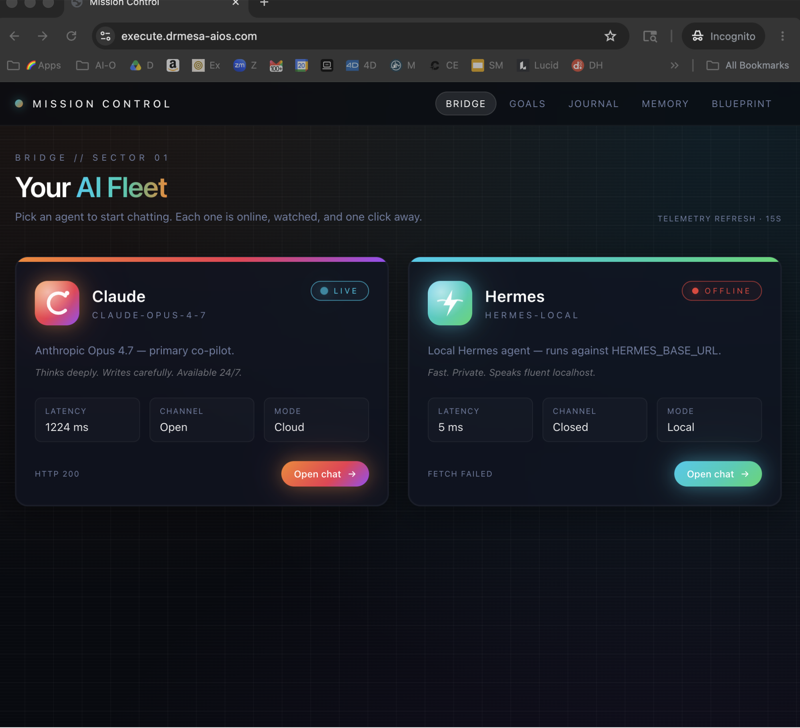
The community angle is worth stating plainly: skill learning gets dramatically better when you can borrow from people ahead of you. Learned skills reflect your conversations, so the fastest way to level up is having better conversations to learn from — proven prompts, working workflows, real use cases. That is exactly what a good group gives you, and the best OpenClaw community roundup ranks where those conversations are happening, while the best OpenClaw course guide covers structured routes in. If your goal is income rather than tinkering, the ways to make money with OpenClaw breakdown connects these features to actual revenue models, and OpenClaw mission control shows how operators keep multi-agent setups observable once the skills multiply.
OpenClaw skill learning is the clearest sign yet that agent platforms are competing on compounding — not on what the agent can do on day one, but on how much better it is by day thirty. The 2026.9.4 release makes that compounding visible, inspectable and yours to direct. Update, watch what your agent learns for a week, prune ruthlessly, and you will end the month with an assistant meaningfully shaped around how you actually work.
If you want to turn learned skills into a working AI income system — with daily tutorials, the full Agent OS bonus and weekly live coaching — check out the AI Profit Boardroom → start compounding inside. Want expert eyes on your plan first? Book a free SEO strategy session — it costs nothing and you leave with a roadmap.