The OpenClaw roadmap is moving faster than any open-source AI agent project I'm tracking right now, and the founders who pay attention are running roughly six months ahead of everyone else. This guide covers every confirmed feature, the expected release windows, and what to set up today so you're ready to leverage each release the moment it ships.
This post breaks down the confirmed roadmap items, the realistic release timeline, the foundations you should be building right now, and which kinds of founders benefit most from each upcoming feature. I've been running OpenClaw daily, so the take is grounded in actual use rather than press-release hype.
🔥 Want my full OpenClaw roadmap playbook? AI Profit Boardroom has my OpenClaw roadmaps, tutorials, courses, and weekly coaching to stay ahead of every release. → Join the Boardroom
Why The OpenClaw Roadmap Matters
Two things make this roadmap genuinely worth tracking, beyond the usual hype cycle.
The first is that OpenClaw stays free and open. The roadmap effectively becomes your roadmap, with no licence fees or vendor lock-in waiting at the end of the year. The second is the velocity of releases. New versions ship every two to four weeks, which means whoever stays current ends up running roughly six months ahead of competitors who are still on whatever stable version landed last summer.
Confirmed Roadmap Items For 2026
Six items are confirmed and in active development for 2026, and each one solves a real workflow problem rather than being a feature looking for a use case.
The first is Computer Use V2, which already shipped in version 4.27 and is now expanding to handle multi-app workflows where the agent jumps between several applications to complete a task. Full details in OpenClaw Computer Use.
The second is memory persistence, which gives agents long-term memory and session continuity across days and weeks rather than starting fresh each session. See OpenClaw Memory Persistence for the deep dive.
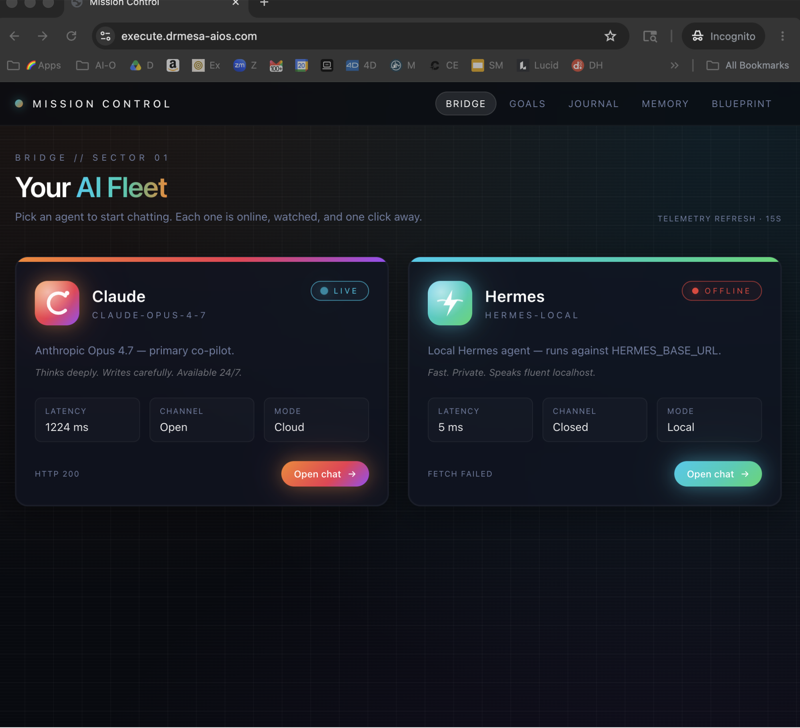
The third is Mission Control UI, a centralised dashboard for managing multi-agent operations from one screen. The walkthrough lives at OpenClaw Mission Control.
The fourth is deeper Telegram and Lobster integrations, turning native messaging into a first-class agent channel. See Telegram Lobster AI Agent for the current state of that integration.
The fifth is AionUI multimodal, which adds proper voice and visual UI capabilities — see OpenClaw AionUI for the details.
The sixth is native multi-agent swarm orchestration, which lets you spawn and coordinate multiple agents from inside OpenClaw itself. Compare with the Hermes equivalent in Hermes Agent Swarm.
Watch The Roadmap Walkthrough
For the OpenClaw computer use feature that's already shipped and worth playing with today, the walkthrough below covers the practical setup.
Release Cadence
The pattern over the past year has been major versions every four to six weeks, minor versions roughly weekly, and patches as needed when bugs warrant it. For 2026 you should plan for somewhere between 12 and 15 major releases over the year, which is genuinely fast for an open-source project.
Q2 2026 Releases
The Q2 window is expected to deliver Mission Control GA, Memory Persistence v2, and the multi-app computer use upgrade. These are the three items currently furthest along in development.
Q3 2026 Releases
Q3 is expected to bring native swarm orchestration, voice UI improvements through AionUI, and the deeper Telegram integration. These items are scoped but less locked-in than Q2.
Q4 2026 Releases
Q4 is more speculative — browser-native workflows, a mobile companion app, and a marketplace for skills and agents are all on the discussion board, but none are confirmed. Treat Q4 plans as direction rather than commitments.
What To Set Up Now
Three preparations will let you leverage future releases the moment they ship rather than spending two weeks catching up.
The first is a solid Hermes/OpenClaw foundation. Don't wait for Mission Control to start using OpenClaw — start now and you'll have months of accumulated knowledge by the time the new UI ships. See How To Setup Hermes Agent for the full setup.
The second is a skills library. Build the skills you'll keep using day after day, because Mission Control will surface them better and the eventual marketplace will reward people who already have a portfolio.
The third is memory practices. Start using the existing memory features now, because Memory Persistence v2 will scale what you've already built rather than asking you to start from scratch.
Common OpenClaw Roadmap Mistakes
Three mistakes I see founders make when tracking this roadmap.
The first is waiting for a "stable" version before starting. OpenClaw is already stable enough for daily use — stop waiting and start building. The second is tracking only major releases. Minor releases ship important features too, so watch the changelog rather than just the release notes. The third is not testing new features within their first week. When V2 ships, test it in week one, because early adopters end up with the leverage when the rest of the market catches up six months later.
Compare With Competitors' Roadmaps
| Tool | Roadmap velocity | Free? |
|---|---|---|
| OpenClaw | Every 2-4 wks | Yes |
| Hermes | Weekly | Yes |
| Accomplish | Monthly | Yes |
| Manus | Quarterly | Paid |
| Claude Code | Bi-weekly | Subscription |
OpenClaw and Hermes are the velocity leaders right now, with Hermes shipping slightly faster on minor improvements while OpenClaw lands bigger feature drops.
How To Track Roadmap Updates
Three sources are worth watching consistently.
The first is GitHub releases — star the repo and you'll get a notification on every release. The second is the Discord and broader community, where active discussion of upcoming features often previews what's coming weeks before the release notes do. The third is the AI Profit Boardroom updates, where I cover every release with practical tutorials so you don't have to interpret the changelog yourself.
🚀 Want every release walkthrough? AI Profit Boardroom members get my OpenClaw release walkthroughs the day each version ships. → Get inside
What I'm Most Excited About
Three items on the roadmap I'm genuinely looking forward to using.
Mission Control GA is first because multi-agent visibility transforms ops work — being able to see what every agent is doing in real time is the difference between managing chaos and running a controlled team. Memory persistence v2 is second because cross-session continuity is what turns OpenClaw into a real second-brain capable agent rather than a powerful one-shot tool. The marketplace is third because if and when it ships, the network effects could compound fast and reward the people who built skills early.
How To Prepare For Each
For Mission Control, run multiple agents in parallel today and document the workflows you settle on. Mission Control will surface what you've already built rather than asking you to design new workflows from scratch.
For Memory Persistence v2, use the existing memory features now and build a memory schema that v2 will extend. The data you accumulate in 2026 will be the foundation that compounds in 2027.
For multi-agent swarms, test single-agent workflows first and read Hermes Agent Swarm for the design principles. Swarms work best when each individual agent already does its job reliably.
Risk: Roadmap Slippage
Open-source roadmaps slip, and you should plan accordingly. Don't bet your business on a specific Q3 feature landing on time — build with what's shipped today and adopt new features as they land. The compounding advantage comes from being ready to adopt fast, not from pre-committing to features that haven't shipped yet.
The Compounding Advantage
The founders who adopt OpenClaw early, build skills and workflows on top of it, and adopt each new release as it lands end up six to twelve months ahead of competitors. The advantage isn't that OpenClaw is uniquely magical — it's that compounding works, and the people who start early benefit from every release stacking on top of the previous ones.
OpenClaw Vs Hermes Trajectory
Both projects are moving fast, but their lanes are different. OpenClaw is leaning into visual interfaces and computer-use capabilities. Hermes is leaning into skills and workflow orchestration. For 2026, both will win in their respective lanes, and pairing them gives you the best of both worlds. See Build Your Own OpenClaw for the architecture I use to run them together.
Five Skills To Build Now
These are the skills worth investing in today because the roadmap will scale them.
The first is a daily summary skill, because memory persistence will turn one-day summaries into longer-running narratives. The second is a multi-step research skill, because multi-agent swarms will scale a research workflow from one agent to five. The third is a communication channel skill, because Telegram integration will turn this into the agent's primary inbound channel. The fourth is a visual UI skill, because AionUI will make rich visual responses possible across more workflows. The fifth is a portfolio of skill marketplace candidates — if and when the marketplace ships, the people with polished, useful skills already built will be in pole position to monetise them.
What If The Roadmap Disappoints
Be honest about the risk. If a Q3 feature delays to Q4, your Q2 work doesn't break, your Q3 plans need a fallback, and your foundations still hold. Build for the present and layer the future on top — that way slippage costs you opportunity rather than progress.
How To Use The Roadmap For Decisions
Three patterns I use when the roadmap intersects with build-or-buy decisions.
The first pattern is "build now or wait?" If a feature is shipping in 90 days, wait. If it's 180+ days away, build the feature yourself today. The second pattern is "buy an alternative or wait?" Check whether an alternative exists today and whether OpenClaw will catch up in 90 days. The third pattern is "switch tools?" Don't switch based on roadmap promises — switch only on shipped features that solve your actual problem.
My Roadmap Watching Routine
Three habits keep me current without it becoming a job.
The first is a weekly GitHub check on Mondays — star the repo and watch the releases tab. The second is a monthly review where I ask what shipped and what changed for my workflow. The third is a quarterly plan where I align my next quarter's projects against the roadmap and my goals.
🔥 Want my full OpenClaw mastery path? AI Profit Boardroom has the OpenClaw 6-hour course, weekly coaching, and roadmap-aligned tutorials. → Get inside
FAQ — OpenClaw Roadmap
Where's the official roadmap?
The GitHub project board is the canonical source, with the changelog and release notes filling in the detail.
How often does it update?
Roughly weekly, with bigger updates landing alongside major releases every four to six weeks.
Will OpenClaw stay free?
Yes — it's open source and the core will stay free. There may be optional paid services layered on top, but the core won't go behind a paywall.
Will pricing models change?
Optional cloud hosting may launch later as a paid service, but the self-hosted core stays free regardless.
Best skill to build for the roadmap?
Daily summary plus multi-step research is the highest-leverage combination, because both will scale dramatically with upcoming features.
What if I'm new — where do I start?
Start with How To Setup Hermes Agent to get the foundations right, then layer OpenClaw on top.
How do I influence the roadmap?
Open issues with concrete use cases and submit pull requests where you can. Active contributors get heard, and the roadmap is genuinely shaped by community input.
Related Reading
- OpenClaw Computer Use — already-shipped feature.
- OpenClaw Mission Control — coming soon.
- Hermes Agent Swarm — multi-agent patterns.
📺 Video notes + links to the tools 👉
🎥 Learn how I make these videos 👉
🆓 Get a FREE AI Course + Community + 1,000 AI Agents 👉
The OpenClaw roadmap is the fastest-moving open-source AI agent roadmap of 2026 — get the foundation right today and ride every release for compounding leverage.