Run openclaw onboard --workspace followed by your workspace name — or click New agent in the web UI's Control section — and OpenClaw 2026.9.5 walks you through building a team of specialist agents: a chief of staff, a researcher, a writer and a reviewer, or any single specialist on its own. That guided setup is what openclaw specialist teams are, it shipped in the v2026.9.5 release on 19 September 2026 per the official release notes at docs.openclaw.ai, and it turns what used to be an hour of manual agent configuration into a wizard you can finish before your coffee goes cold.
📺 Watch: OpenClaw 2.0 Is a MASSIVE Upgrade for AI Agents
🔥 Get the Agent OS as a free bonus: AI Profit Boardroom members get the full Agent OS zip, prompt libraries, daily tutorials and weekly live coaching calls. → Get inside · Want AI SEO help 1-on-1? Book a free SEO strategy session →
The significance is easy to miss if you have not tried to build a multi-agent setup by hand. Until now, getting several OpenClaw agents to work as a coordinated unit meant creating each one separately, wiring up their roles yourself and hoping the division of labour held. The 2026.9.5 guided setup packages the pattern the community had already converged on — one coordinating agent plus role specialists — into a first-party flow. If you are newer to the ecosystem, the what are AI agents primer covers the building blocks this feature assembles for you.
How OpenClaw Specialist Teams Work In 2026.9.5
According to the v2026.9.5 release notes, the guided setup offers a four-role template — chief of staff, researcher, writer and reviewer — or lets you pick a single specialist instead of the whole team. The chief of staff acts as your coordinator, and the wizard is built to be interrupted: if you stop partway and come back, it remembers your coordinator choice and resumes rather than starting over. Nothing is created behind your back either — the setup presents a proposal that you approve before anything is actually built, so you see the full team structure on screen before a single agent exists. There is also an escape hatch: selecting Skip creates the team offline, with the AI configuration kept separate for you to attach later.
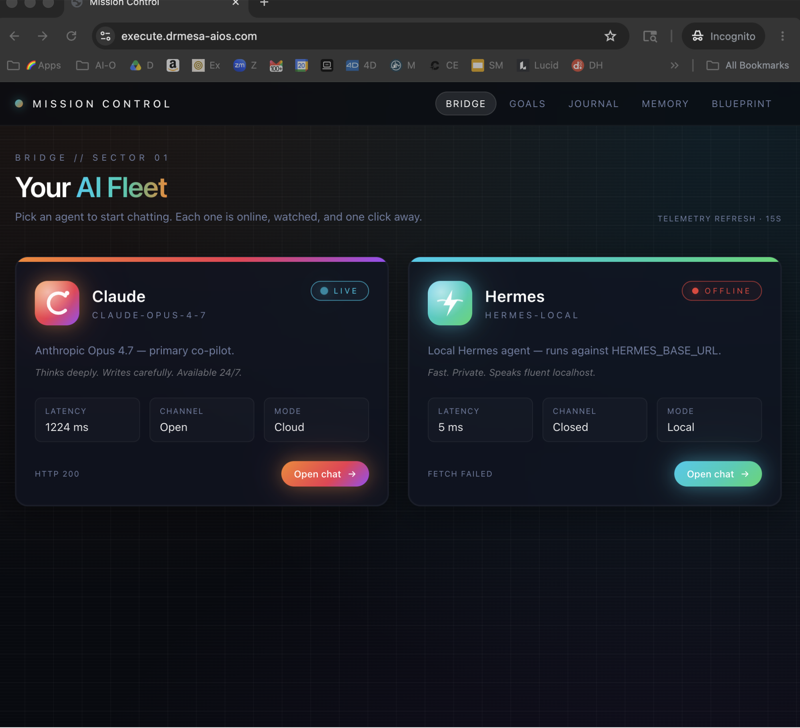
That proposal-first design matters for anyone cautious about agent sprawl. You get to read what the wizard intends — which agents, which roles — and only then commit. It is the same review-before-it-runs philosophy that makes OpenClaw Mission Control the sensible way to watch agents once they are working: visibility first, autonomy second.
| Role | Job in the team |
|---|---|
| Chief of staff | Coordinates the team and is remembered by the wizard if setup is resumed |
| Researcher | Gathers source material and answers |
| Writer | Produces the drafts and deliverables |
| Reviewer | Checks the output before it reaches you |
If you want a specialist agent team producing content and leads for your business rather than sitting in a demo workspace — with the full Agent OS zip, prompt libraries and weekly live coaching included — check out the AI Profit Boardroom → build your first working agent team. Want a 1-on-1 plan for your niche first? Book a free SEO strategy session.
Starting The Guided Setup: Terminal Or Web UI
There are two doors into the OpenClaw specialist teams wizard, per the release notes. From the terminal, run openclaw onboard --workspace with your workspace name to launch the guided flow against that workspace. From the browser, open the Control section of the web UI and choose New agent, which now leads into the same guided setup rather than a blank configuration form. Either path ends at the same approval screen, so pick whichever matches how you already drive OpenClaw — terminal-first operators and OpenClaw desktop app users get the identical team out the other side.
The release the wizard arrives in is substantial in its own right: the project's GitHub releases page records v2026.9.5, published 19 September 2026, as bundling 64 direct commits and 4,179 pull requests from 503 contributors. So this is not an experimental side branch — it is the mainline release, and the guided setup is one of its headline features.
📺 Watch: I Tested OpenClaw 2.0 Browser Use - Here Is the Truth
What Else Ships Alongside Specialist Teams
Three companion features in v2026.9.5 make the specialist-team pattern more practical day to day, per the same release notes. Plugin hot reloading means you can install supported plugins without restarting your Gateway, and verified official plugins skip a redundant approval step — so extending a running team no longer means taking it down. Atomic updates make upgrades safer: the system checks the next version before switching over, which is exactly the reassurance you want once a four-agent team depends on the install. And read-only conversation sharing plus conversation archiving give teams a memory trail: you can hand a colleague a view of what an agent did without giving them the keys, and archive threads to revisit later. The release notes also flag GPT Live joining meetings and phone calls, which points at where multi-agent setups are heading next.
Put together, the theme of 2026.9.5 is turning OpenClaw from a single-agent tool into a small-team platform. The previous release, v2026.9.4 on 11 September, laid the groundwork by making plugins and skills easier to find and letting you turn past conversations into reusable skills — covered in detail in the OpenClaw skill learning write-up. Skills gave individual agents leverage; specialist teams now give that leverage an org chart.
Specialist Teams Versus Building Your Own Crew
Should you use the wizard or keep hand-rolling your own multi-agent setup? For most people the wizard wins on speed and loses nothing on control, because the proposal step still shows you everything before creation and you can edit agents afterwards like any other. Hand-rolling still makes sense when your team shape does not match the template — say, three writers and no reviewer for a content farm pattern, or research-only crews. It is the same trade-off that shows up when comparing platforms: the Hermes vs OpenClaw comparison covers how the two ecosystems approach multi-agent work differently, and the short version is that OpenClaw is betting on guided, reviewable team creation while Hermes leans on its workspace and delegation model.
Whichever route you take, resist the urge to build the full four-role team on day one if you do not yet have a job for it. A researcher-writer pair with a clear brief outperforms a full team with a vague one. The role templates are a starting shape, not a requirement — the release notes are explicit that you can choose a single specialist — and the teams that pay for themselves are the ones mapped to a real recurring workflow: content production, lead research, reporting. The Agent OS guide covers that operating layer — the briefs, memory and routines that make any agent team productive — and the Goldie Bench write-up covers how the underlying model brains compare in hands-on tests, which matters when you decide what each specialist should run on.
Do You Need To Update To Get Specialist Teams?
Yes — the guided setup ships in v2026.9.5, so you need to be on the current release line to see it. That matters for one group in particular: the project's GitHub releases page also lists v2026.6.35, published 10 September 2026, as the final June 2026 Extended Stable release, and teams parked on that long-term line will not find the specialist-teams wizard in it. The good news is that 2026.9.5 itself makes the move less nerve-racking, because the new atomic updates check the next version before switching over rather than cutting across and hoping. Update at a quiet moment, confirm your existing agents come back up, and only then run the onboard flow. If your install predates this year's releases entirely, it is worth skimming what has landed since — the OpenClaw 4.20 update write-up shows how far the platform has moved in a few cycles, and the pace has not slowed since.
Getting Value From A Specialist Team In Week One
The fastest path to a return with OpenClaw specialist teams: pick one weekly deliverable you already produce manually — a newsletter, a client report, a content batch — and assign it to the team as their standing job. Let the researcher gather, the writer draft, the reviewer check, and you approve. That single loop teaches you where the template fits your business and where it needs editing, and it gives the team a measurable output from day one. From there, expand sideways into a second workflow rather than upwards into more agents. If you get stuck, the OpenClaw community round-up lists the places where people share working team configurations, and updates in this ecosystem land fast — 2026.9.4 and 2026.9.5 arrived eight days apart — so the configurations people share stay current.
If you want the exact agent-team workflows that turn releases like this into revenue — daily tutorials, the full Agent OS bonus and weekly live coaching calls — check out the AI Profit Boardroom → get inside and copy the builds. Or map your setup 1-on-1 first: book a free SEO strategy session.