In the Grok Build CLI vs Claude Code decision, the short answer is this: Claude Code is the more mature, more widely deployed coding agent with the deeper ecosystem — CLI, desktop app, web, IDE extensions, plugins, subagents and scheduled routines — while Grok Build is xAI's newer terminal agent whose stand-out strength is its disciplined plan, review, approve workflow, where you comment on or rewrite the plan before a single file changes and every change lands as a clean diff. If you already pay for SuperGrok or X Premium Plus, Grok Build costs you nothing extra and is genuinely worth running; if you are choosing one tool from scratch for serious agent work, Claude Code remains the safer default. Everything below is drawn from the official sources: xAI's Grok Build announcement of 25 May 2026, the open-source xai-org/grok-build repository on GitHub, and Anthropic's Claude Code documentation at code.claude.com.
🔥 Get the Agent OS as a free bonus: AI Profit Boardroom members get the full Agent OS zip, prompt libraries, daily tutorials and weekly live coaching calls. → Get inside · Want AI SEO help 1-on-1? Book a free SEO strategy session →
What Grok Build's CLI Actually Is
Grok Build is xAI's terminal-based coding agent, announced on 25 May 2026 as "a powerful new coding agent for professional software engineering and complex coding work". It installs with a single command — a curl one-liner on macOS and Linux, a PowerShell one-liner on Windows — and runs as a full-screen, mouse-interactive TUI in your terminal. The public repository describes an agent that understands codebases, edits files, executes shell commands, searches the web and manages long-running tasks, with the first-party code published under the Apache 2.0 licence and full documentation at docs.x.ai.
Three details from the official material stand out for anyone comparing it with Claude Code:
- Plan mode is the centrepiece. For complex tasks you approve the plan, comment on individual steps, or rewrite it entirely before execution begins — and once approved, every change shows up as a clean diff.
- It speaks the same workflow language. Grok Build reads AGENTS.md files and supports plugins, hooks and MCP servers, so an existing agent-instruction setup carries over.
- It scales down and up. A headless mode (the -p flag) covers scripting and CI, parallel subagent delegation covers larger tasks, and Agent Client Protocol support lets you build custom clients on top.
Access, per the launch announcement, comes with SuperGrok and X Premium Plus subscriptions rather than a standalone price, and first launch authenticates through your browser.
What Claude Code Brings to the Fight
Claude Code is Anthropic's coding agent — the incumbent Grok Build is squaring up against — and by September 2026 it is less a CLI than a platform. Anthropic's own documentation lists the CLI, a desktop app for Mac and Windows, a web app, and VS Code and JetBrains extensions — plus a steady weekly feature cadence. Recent months alone added fork mode on by default (subagents that inherit your full conversation), background subagents, scheduled routines that fire cloud agents from a timer or GitHub event, an auto permission mode that replaces prompt-by-prompt approvals with background safety checks, and a /design research preview. Default models are top-tier: Claude Opus 5 with a 1M-token context window on Max-tier plans, Claude Sonnet 5 on Pro. If you are new to it, the learn Claude Code guide covers the fundamentals, and the multi-agent orchestration guide shows the subagent side that most beginners never touch.
The ecosystem is the real moat. Plugins, skills, hooks, MCP servers, a marketplace, session sharing, and cloud execution all exist today and are documented, which is why Claude Code keeps winning "default choice" status in agent communities — a pattern you will also recognise from the DeepSeek Harness vs Claude Code comparison.
If you want working agent setups for either tool instead of assembling everything yourself, the AI Profit Boardroom hands you the full Agent OS, prompt libraries and weekly live coaching. Want a personal plan for ranking with AI content? Book a free SEO strategy session.
Grok Build CLI vs Claude Code: Feature by Feature
| Area | Grok Build CLI | Claude Code |
|---|---|---|
| Interface | Full-screen terminal TUI, mouse-interactive | CLI, desktop app, web, IDE extensions |
| Planning workflow | Plan, review, approve; comment on or rewrite steps before execution; clean diffs | Plan mode plus auto mode with background safety checks |
| Subagents | Parallel subagent delegation | Background subagents, fork mode, orchestrated workflows |
| Automation | Headless -p mode for scripting and CI; ACP for custom clients | Headless mode, hooks, scheduled routines, GitHub integration |
| Extensibility | AGENTS.md, plugins, hooks, MCP servers | CLAUDE.md, plugins, skills, hooks, MCP servers, marketplace |
| Access | Included with SuperGrok and X Premium Plus | Included with Claude subscriptions (Pro, Max, Team) or API pricing |
| Source | Repository public under Apache 2.0 (first-party code) | Proprietary product with extensive public docs |
Read the table with intent in mind. On raw workflow safety, Grok Build's insistence that you approve a plan before execution is a genuinely good default for risky refactors. On breadth — surfaces, orchestration, ecosystem — Claude Code is ahead, and its weekly changelog shows no sign of slowing.
Which One Should You Pick?
- Pick Claude Code if you want the most capable all-rounder. Deeper orchestration, more surfaces, bigger ecosystem, frontier default models. It is the tool the rest of the agent market gets benchmarked against.
- Pick Grok Build if you already pay xAI. SuperGrok and X Premium Plus subscribers get a professional-grade coding agent at no extra cost, with a review-first workflow that suits cautious teams.
- Run both if your work justifies it. They share the AGENTS.md convention and MCP, so your instructions and tool servers transfer — the switching cost is genuinely low.
One caution for the Grok side: the CLI is part of a fast-moving family of Grok products — the in-chat app builder now shares the Grok Build name, and the free tiers around Grok's bots move often, as the Grok Bot free access guide and the free alternatives round-up both document. Check what your current plan actually includes before you commit a team to it.
The Bigger Context for Agent Builders
Terminal coding agents are converging on the same shape: instruction files, MCP tool servers, subagent delegation, plan-first execution. That convergence is good news for you, because skills learned in one transfer to the next — the same dynamic covered in the Hermes vs OpenClaw comparison and visible in the Hermes Bot vs Grok Bot write-up. If you want the instruction-file layer done properly from day one, the Agent OS guide covers the setup that carries across all of these tools, and the Goldie Bench write-up covers how the underlying models compare in hands-on tests — worth a look before you assume the model behind either agent is the one you need.
The bottom line on Grok Build CLI vs Claude Code: xAI has shipped a credible, well-designed challenger with one signature idea — plan first, diff everything — while Anthropic still owns the most complete agent platform. Choose depth and ecosystem, or choose the review-first workflow bundled with a subscription you may already have. Either way you end up with a serious agent in your terminal.
Grok Build CLI vs Claude Code: Quick Answers
Is the Grok Build CLI free?
Not standalone. xAI's launch announcement ties access to SuperGrok and X Premium Plus subscriptions, so the CLI is effectively a bundled benefit rather than a separate product. The repository's first-party code is published under the Apache 2.0 licence, but running the agent still authenticates against your xAI account on first launch. Claude Code follows the same bundling logic on the Anthropic side: it is included with Claude subscription plans, with API pay-as-you-go pricing as the alternative route.
Do both tools support MCP servers?
Yes. The Grok Build documentation at docs.x.ai covers MCP server configuration alongside theming, headless mode and sandboxing, and Claude Code's MCP support is long-established and central to its plugin ecosystem. This shared foundation is exactly why running the two side by side is cheap: the tool servers you configure once are usable from either agent.
Which is better for automation and CI?
Both run headless — Grok Build with its -p flag for scripting and CI, Claude Code with headless mode plus hooks and scheduled routines on top. If your automation needs are simple ("run this agent in a pipeline"), they are equivalent on paper. If you want scheduled cloud agents, event triggers and background orchestration as managed features, Claude Code currently documents far more of that surface.
Can a beginner start with either?
Realistically, yes — both install with a one-line command. The difference is learning surface: Grok Build is one well-designed TUI, while Claude Code spans CLI, desktop, web and IDE extensions, which is more to absorb but also more places to meet you where you already work.
If you want to turn whichever agent you pick into actual income — content systems, SEO agents, automation clients — check out the AI Profit Boardroom, where members get the Agent OS, daily tutorials and five live calls a week. Or start with a conversation: book a free SEO strategy session and get a plan for your exact situation.
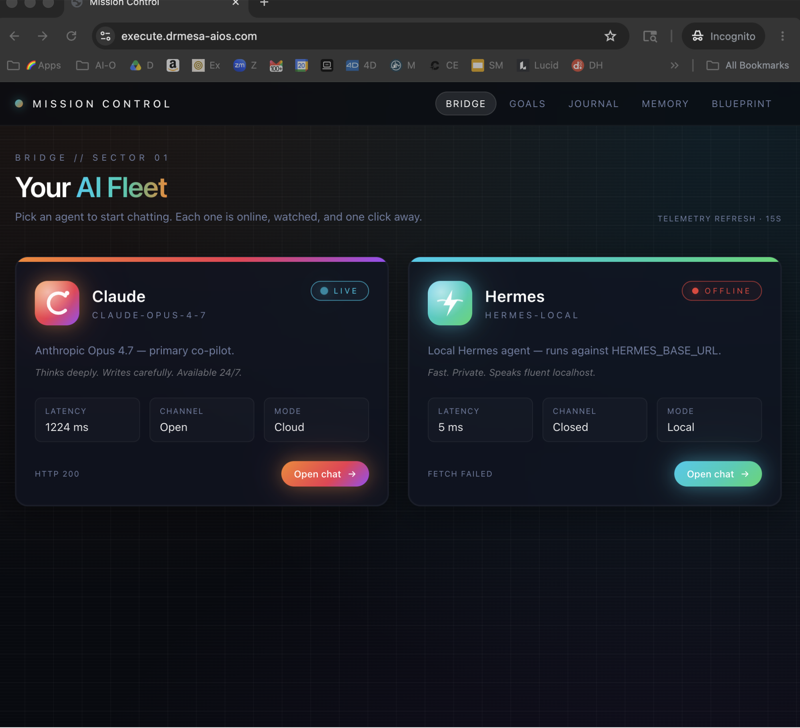
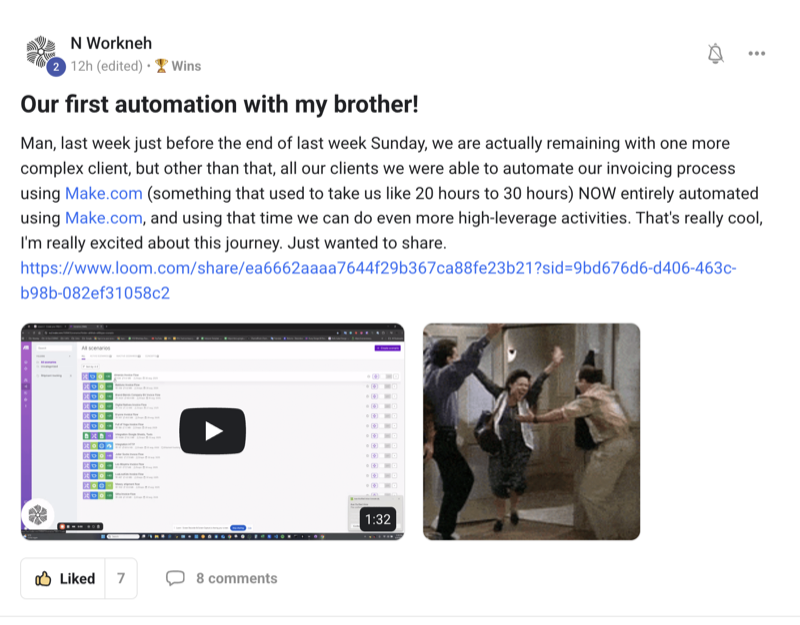
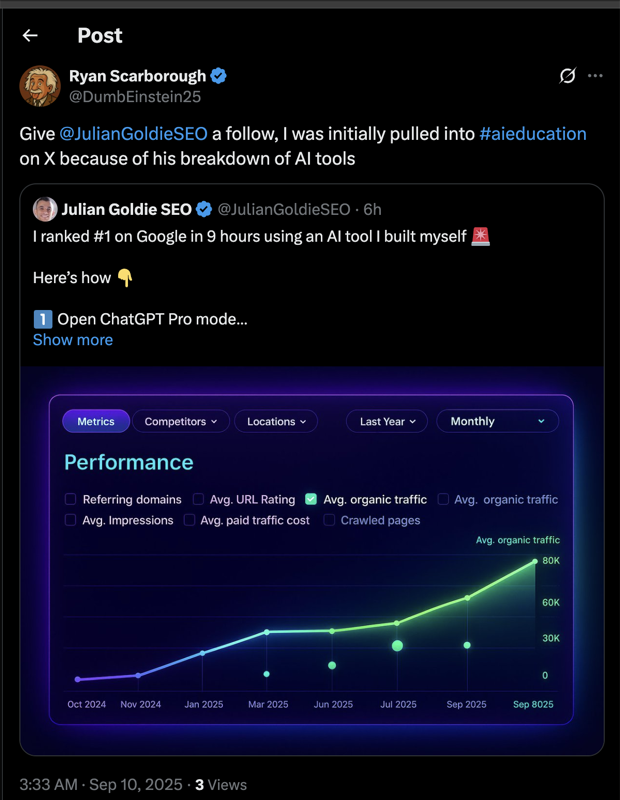
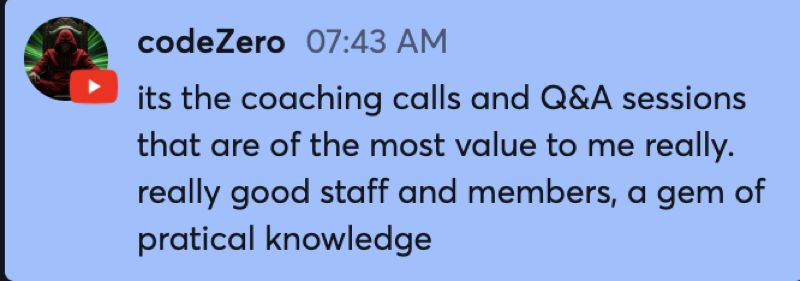
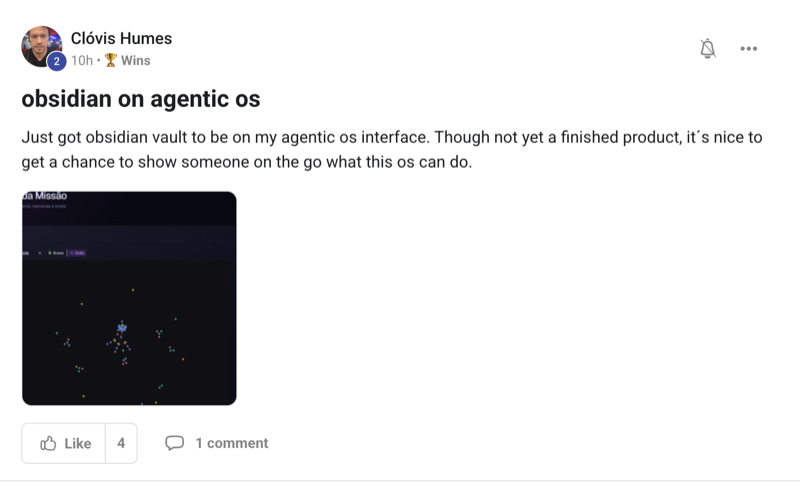
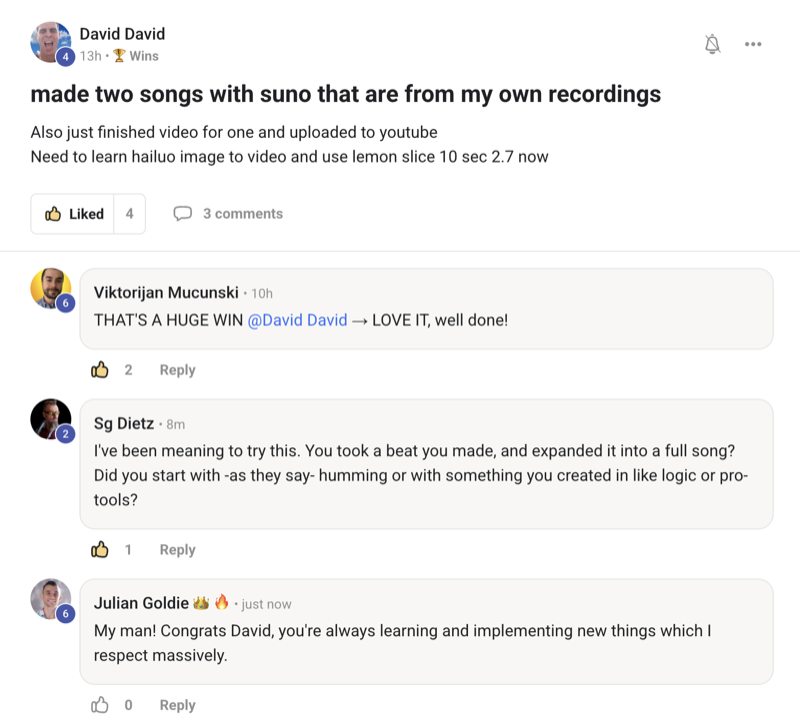
Real wins from inside the AI Profit Boardroom
See all 3,000+ members →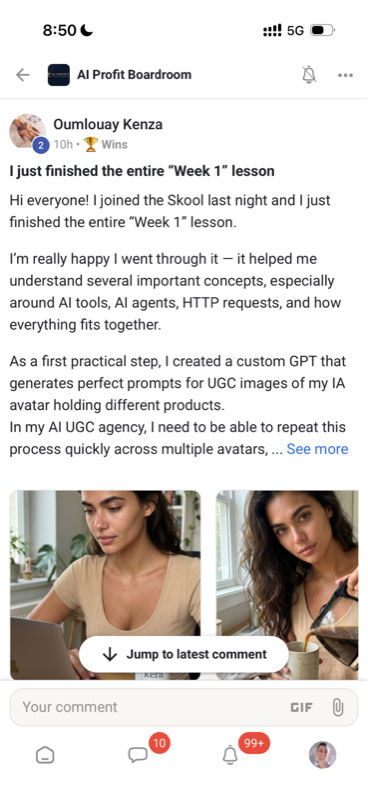

Ready To Join The #1 AI Community?
Join 3,600+ entrepreneurs inside the AI Profit Boardroom. Get 1,000+ plug-and-play AI agent workflows, daily coaching, and a community that holds you accountable.
Join The AI Community →7-Day No-Questions Refund • Cancel Anytime

Wait — before you leave
Get the entire AI Profit Stack for $59/mo locked
- 🎯 1,000+ done-for-you AI agent workflows
- 📅 5 live coaching calls per week with me
- 👥 3,000+ AI operators inside
- 🛡️ 7-day refund + 30-day ROI guarantee