OpenClaw memory persistence is the hidden problem most AI agent users haven't solved, and OMI plus Obsidian is the stack that fixes it. If your OpenClaw agent forgets context between sessions, this changes everything about how the tool works for you.
This post covers why memory persistence matters for OpenClaw, the OMI plus Obsidian solution, how it connects to OpenClaw via MCP, and what you can do once memory persists.
The OpenClaw Memory Persistence Problem
Most AI agents have limited memory. You give them context, the session ends, and the context disappears. Next session, you re-explain everything from scratch.
For OpenClaw, this is the same. Your agent doesn't really know you — it only knows what you've told it in the current session. That's the persistence problem and it's what stops AI agents from feeling like real assistants.
What OMI Solves
OMI is a tool that captures everything you do — conversations, screen activity, spoken thoughts, and notes. It's open source and local-first, building a "second brain" of your daily activity.
For OpenClaw, OMI becomes the memory layer your agent always missed.
What Obsidian Adds
Obsidian is a knowledge management tool that's markdown-based and stores everything as local files. OMI exports its captured context into Obsidian as markdown notes, and now you have captured raw data (OMI), structured knowledge (Obsidian), both local and yours.
This is the "LLM Wiki" pattern — a personal knowledge graph that compounds over time.
How OpenClaw Memory Persistence Plugs In
Three integration paths exist depending on how technical you want to get.
The first path is via MCP server. OMI has an MCP (Model Context Protocol) server, OpenClaw can connect to it, and your OpenClaw agent queries OMI directly when it needs context. The second path is via Obsidian MCP. Obsidian also has MCP support, so OpenClaw queries Obsidian and pulls in your structured knowledge. The third path is direct file access, where OpenClaw reads Obsidian markdown files as needed — simpler but more manual.
For most users, Path 1 (OMI MCP) is best.
The Persistence Magic
Once connected, OpenClaw remembers what you've discussed, knows your preferences, understands your projects, and doesn't lose context between sessions.
Effectively, OpenClaw now has a memory of you. Not generic — personal and persistent.
🔥 Want the full OpenClaw + OMI memory persistence playbook? Inside the AI Profit Boardroom, I share my OMI + Obsidian + OpenClaw setup, MCP configs, and 30-day road map. Plus 6-hour OpenClaw course and weekly live coaching where you can share your screen for help. 3,000+ members. → Get the playbook
Why This Pattern Specifically
The Karpathy LLM Wiki pattern is the inspiration here.
Andrej Karpathy (former Tesla AI lead, OpenAI founding member) has talked about building dense, structured, interconnected notes that compound over time. Like a Wikipedia, but written entirely by you. Every idea links to another idea, every concept has context, every piece of knowledge builds on the last.
The result is a living document that gets smarter every day. OMI plus Obsidian plus OpenClaw automates this pattern.
Setting Up The Stack
Five steps to get the full stack running.
Step one is installing OMI. Download from omi.me (or wherever it's distributed) — it's open source so you can self-host, and a Mac app is available. Step two is configuring OMI capture. Choose what OMI records — microphone audio, screen captures (optional, with privacy considerations), and specific conversations. Be intentional and don't capture everything if you're privacy-sensitive. Step three is installing Obsidian, which is free from obsidian.md. Create a vault for your OMI exports. Step four is connecting OMI to Obsidian. In OMI's apps section, enable Obsidian sync — OMI will export captured memories to your Obsidian vault as markdown. Step five is connecting OpenClaw to OMI. Install OpenClaw if not already done (see Build Your Own OpenClaw) and configure OpenClaw with OMI's MCP server. You're done.
What This Unlocks
Three things become possible once the stack is live.
The first is that OpenClaw remembers context, so you don't re-explain projects every session. The second is that OpenClaw knows your preferences — tone, format, style all captured and applied automatically. The third is that OpenClaw works on your specific knowledge rather than generic answers.
This is the difference between a generic assistant and a personalised one.
What You Can Do Day One
Three immediate use cases that demonstrate the value.
The first is project context — your OpenClaw agent knows what projects you're working on, what's in flight, and what needs follow-up. The second is personal preferences — your style, voice, and standards all get applied automatically without you having to specify them each session. The third is past decisions — what you decided last week and why, with OpenClaw recalling them when relevant.
Privacy Considerations
Honest about the risks. OMI captures a lot, so you should choose what to record, configure exclusions for passwords and sensitive screens, and use local-only mode if privacy is critical.
You can also delete your data anytime. For most users, the privacy trade-off is acceptable. For privacy-critical work, configure carefully.
Pairing With Other AI Tools
OMI plus Obsidian works with any AI — OpenClaw (this post), Claude Code, Hermes (see Hermes Workspace profile memory), ChatGPT, and Notion all work with the same memory layer.
Set it up once, plug into any AI.
The Compound Effect
The longer you run OMI, the more context it captures, the smarter your agents become, and the better outputs get.
This is compounding knowledge — your AI gets more useful over time without manual training.
What This Doesn't Do
Honest about the limits.
It doesn't replace strategic thinking. It doesn't auto-improve agent quality (better context, but model-dependent quality). It doesn't perfectly capture nuanced human conversations.
For 80% of memory persistence needs, it's enough.
Daily Reality
What it looks like in daily use. OMI captures your day automatically. Memories sync to Obsidian. OpenClaw queries via MCP when needed. Agent responses are contextual.
You're building a personal LLM training set with every conversation.
🚀 Want my full OpenClaw + OMI memory stack? The AI Profit Boardroom has my OMI + Obsidian + OpenClaw setup, OpenClaw 6-hour course, daily training, weekly live coaching. 3,000+ members. → Join here
FAQ — OpenClaw Memory Persistence
Is OMI free?
Free now — likely paid tiers in future for storage scale.
Does OMI work on Windows?
Mac primary. Other platforms in development.
Can I delete my OMI data?
Yes — anytime.
Will OMI capture everything I do?
Only what you configure. Choose deliberately.
How does this compare to Hermes Workspace memory?
Hermes Workspace has built-in memory. OMI plus Obsidian is a more comprehensive context layer. Use both.
Is this safe for client data?
If you exclude client-related captures, yes. For privacy-critical work, configure carefully.
Will my agents remember conversations from a year ago?
Depends on OMI retention settings. Default retains long-term.
Related Reading
- OpenClaw Computer Use — desktop automation.
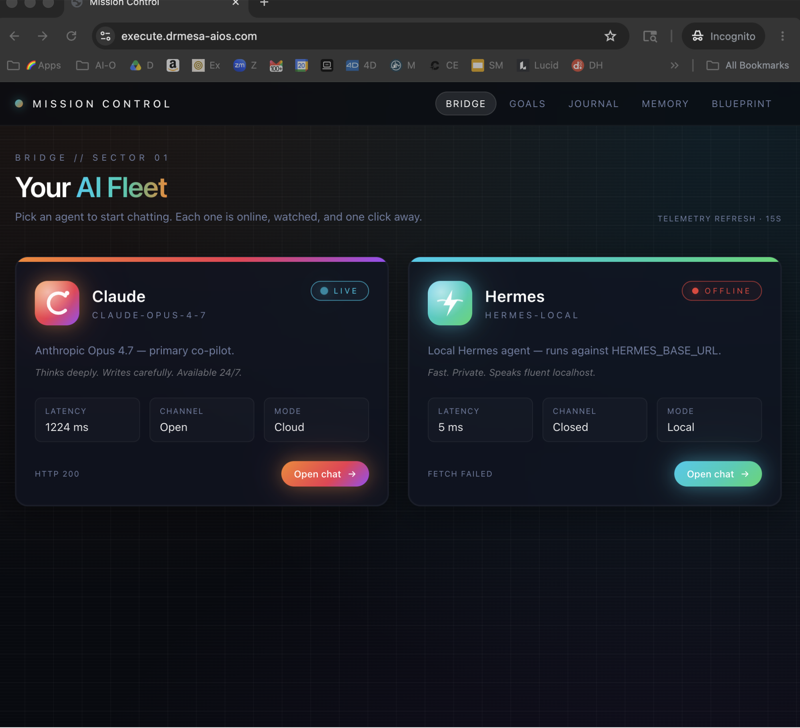
- OpenClaw Mission Control — agent dashboard.
- Hermes Workspace — Hermes memory equivalent.
📺 Video notes + links to the tools 👉
🎥 Learn how I make these videos 👉
🆓 Get a FREE AI Course + Community + 1,000 AI Agents 👉
OpenClaw memory persistence is solved with OMI + Obsidian — install today and your AI agent finally knows you.