Agent OS is the single biggest upgrade I've made to my workflow this year, and it didn't come from a new model or a new tool. It came from finally connecting the agents I already had into one operating system that runs the business for me. This is the layer almost nobody talks about, and it's the difference between owning AI tools and actually running an AI company.
This post is the business-owner view of the agent os. I'll walk through the phone OS analogy that made the whole thing click for me, the 4-layer Goldie Mission Stack that powers my mission control, how I built mine in roughly one hour with Claude Desktop, and how to grab the full bonus pack inside AI Profit Boardroom if you'd rather skip the build.
Want my exact Agent OS setup? Inside the AI Profit Boardroom, you get the full Agent OS zip file, 100+ Agent OS prompts, and a 30-day roadmap. Plus 5 weekly coaching calls and 3,000+ members running these systems daily. Get inside for $69/mo locked forever
What An Agent OS Actually Is
An agent os is a personal operating system that runs your AI stack the way iOS runs your phone. It sits on your machine, it gives every agent a shared memory, and it turns Claude, Hermes and OpenClaw from three disconnected tabs into one coordinated business system. The agents stop working in isolation and start working as a team.
The clearest way to picture this is the phone analogy I keep coming back to.
Without an operating system, every app on your phone just sits there doing nothing on its own.
Calendar can't talk to Mail. Maps can't talk to Messages. Photos can't talk to anything else either.
That's exactly what most people's AI setup looks like in 2026.
ChatGPT lives in one tab. Claude lives in another. Hermes, OpenClaw and whatever else are scattered across the desktop with zero shared memory between them.
An agent os fixes that by becoming the iOS for your AI agents. It connects every agent to every other agent, gives them shared memory, and runs the whole thing locally so your data never leaves your machine.
I've broken down the local-first mission control in detail over in hermes agent mission control if you want to see the dashboard up close.
The Hammer Vs Construction Company Analogy
The other framing I use with everyone in my community is the hammer analogy, because it makes the gap brutally obvious. Using Claude on its own is like owning a hammer. Running an agent os is like running a construction company. Both can build things, but only one of them scales.
A hammer needs you to swing it every single time. A construction company has crews, supervisors, plans, and a system that keeps moving when you step away.
That's the exact difference between someone using AI and someone running an AI agent os.
Day one of using Claude on its own is fine.
Day thirty looks pretty much the same as day one, because nothing remembers anything and nothing compounds.
Day one of running an agent os is also fine.
Day thirty is wild, because every conversation has stacked into memory, every workflow has been wired into a Kanban, and the agents are now operating with full context on your business.
That's the compounding effect almost nobody talks about. It's why I've been pushing this stack so hard inside AI Profit Boardroom over the last few months.
The Goldie Mission Stack — The 4 Layers Of My Agent OS
The agent os I run on my Mac is built on what I call the Goldie Mission Stack. Four layers, each with a specific job, and the whole thing falls over if you skip the last one. This is the same stack I cover in agentic ai os but here's the business-owner version.
Layer 1 — Intelligence (Claude / Claude Code)
Intelligence is the CEO layer of my agent os. Claude and Claude Code sit at the top, plan the work, decide what gets prioritised, and execute the actual code when a build needs to happen.
This is the layer most people start and stop at. It's also why most setups never feel like a real system.
Claude on its own is incredibly capable, but it's still just one agent in one tab without memory of yesterday.
Layer 2 — Execution (OpenClaw)
OpenClaw is the execution layer that turns a single agent into a multi-agent team. It's the local gateway that routes tasks between Claude, Hermes and any other agent, manages sessions, and coordinates the actual work.
If Intelligence is the CEO, OpenClaw is the COO. It takes what Claude decides and parcels the actual execution out to the right specialist.
I've covered the deeper OpenClaw setup over in openclaw computer use if you want the technical breakdown.
Layer 3 — Research (Hermes)
Hermes is the research layer that runs the multi-step workflows. Tool calls, Kanban boards, skills, plugins, browser automations — Hermes handles the long-running jobs that would melt a single Claude session.
This is the workhorse layer. It's where the heavy operational work actually happens once Claude has decided what needs doing.
I've documented the full Hermes install over in hermes agent installation guide 2026 and the broader framework in hermes ai agent framework 2026.
Layer 4 — Self (Obsidian Vault + OMI)
The Self layer is the one nobody talks about and it's the one that makes the whole agent os actually feel personal. OMI records what's happening on my screen and through my microphone during the day, exports the transcripts into my Obsidian vault, and agents pull personal context from that vault on every prompt.
This is the unlock. Context is the single biggest driver of AI performance, and the Self layer gives every agent in your stack permanent, personal context to work with.
Without it, your agents produce generic output that any other agent could produce.
With it, the outputs are specific to your business, your customers, your projects, and your voice.
That's why I refuse to call something an agent os if it doesn't include the Self layer. It's the difference between a generic AI workflow and a personal AI operating system.
Mission Control — What The Dashboard Actually Looks Like
Mission control is the front door to the whole agent os. It's where I spend the first hour of every morning, and once you see it running you'll never go back to switching tabs.
Down the left rail are the live status indicators for each agent in my stack — Claude, Hermes and OpenClaw all showing whether they're online and how busy they are. The middle is the active chat with whichever agent I'm currently driving, and the right rail is a goals tracker with progress bars across my key projects.
Every chat auto-saves into my Obsidian memory layer.
A daily journal section captures what I worked on, what got blocked, and what's queued for tomorrow.
Each agent has its own control room with API keys, providers, session history, skills, plugins, Kanban board and full analytics.
The analytics view shows sessions, tool calls, tokens consumed, models used and peak working hours, so I can see exactly where my AI spend is going.
This is the dashboard layer that makes the whole thing feel like an operating system instead of a folder of scripts.
Why Local-First Wins For An Agent OS
The other piece of this that took me a while to internalise is why local-first matters so much for an agent os. Most of the AI tools in the market are cloud-first, which makes them simple to ship but creates three real problems for business owners.
Your data lives on someone else's servers, which is a privacy and compliance issue when your agent is reading client work.
Round trips to the cloud add latency that adds up across thousands of calls per week.
You're entirely dependent on a third party staying online, keeping pricing fair, and not changing terms on you mid-project.
Running the agent os locally fixes all three.
Data stays on my Mac.
Latency is essentially zero.
The whole stack keeps working if the wifi drops or a provider has a bad day.
I dig into the broader case for local-first stacks over in claude code local if you want the full breakdown.
How I Built My Agent OS In One Hour
The wildest part of this whole thing is how fast it came together once I had the architecture clear in my head. I built the working version of my agent os in roughly one hour using Claude Desktop.
I opened Claude Desktop and described the dashboard I wanted in detail.
I pasted in the Hermes and OpenClaw documentation from GitHub so Claude had the exact integration surface to work with.
I asked Claude to scaffold the whole thing in Next.js and Tailwind so it would feel like a real app, not a script.
I ran the result locally, fixed a couple of issues with another round of prompts, and within an hour the mission control was live on localhost.
I covered the rough Claude Desktop build flow inside claude hermes agent if you want to see how the agent connects on the technical side.
This is the part that breaks most people's brains. You can literally describe an operating system to Claude, hand it the relevant docs, and have a functional version running in an afternoon.
What Changes Once The Agent OS Is Running
The day-to-day shift is harder to explain than the architecture. Here's the honest version of what changes when you stop using AI tools and start running an agent os.
I open one app in the morning instead of five tabs.
The agents already know what I worked on yesterday because the memory layer carried it forward overnight.
I describe a new project once, and every agent has shared context for the rest of the build.
Long-running tasks run in the background on the Hermes side while I work on something else.
Daily journal and analytics give me an honest view of where my time and tokens are going.
The compounding effect kicks in around week two. By the end of the first month, the agents are producing work that's specific to my business in ways that no fresh ChatGPT session ever could.
That's the difference an agent os makes. It's a business operating system that happens to be built out of AI agents.
Inside AIPB — The Full Agent OS Bonus Stack
If you want the shortcut to running the same agent os on your machine, the entire setup is bonused inside AI Profit Boardroom at $69/mo locked forever. Here's what's in the Agent OS bonus pack specifically.
The full Agent OS zip file ready to install on your machine.
100+ Agent OS prompts I use to drive Claude, Hermes and OpenClaw across the stack.
The 30-day roadmap to take you from zero to fully operational mission control.
Everything is wrapped inside the broader Boardroom which includes 5 weekly coaching calls, 3,000+ members building these systems, daily Q&A with me, 1,000+ done-for-you AI workflows, and a 7-day refund plus 30-day ROI twin guarantee.
This is the exact stack I run my Goldie Agency on. It's not theory.
Get the full Agent OS bonus pack Join the AI Profit Boardroom at $69/mo locked forever and grab the Agent OS zip, 100 prompts, 30-day roadmap, plus weekly coaching with me. Get inside now
The AIPB Walkthrough — See What's Actually Inside
If you want a proper inside look at the Boardroom before you join, watch this short walkthrough. It shows the calendar of weekly calls, the bonus stack including the Agent OS pack, and the community space where members ship these builds together.
You'll see exactly why this stack is the one I'd recommend for any business owner trying to actually use AI rather than just play with it.
Free AI Money Lab — Try The Stack Without Paying
If $69/mo isn't where you're at yet, I run a completely free community as well. The AI Money Lab gives you the public training, a slice of the prompt library, and a slower walk through the Goldie Mission Stack. It's the on-ramp if you want to see how I work before joining the paid Boardroom.
It's also the right move if you want to build your own agent os from scratch without buying the bonus pack.
Strategy Session — Goldie Agency Custom Builds
For business owners who'd rather have my team build a custom agent os around their company instead of going DIY, I take a limited number of strategy sessions through the Goldie Agency. You can book a free strategy call over at go.juliangoldie.com/strategy-session and we'll map out what your version of mission control should look like.
This is the path for agencies, SaaS founders and operators who want the system custom-fitted rather than built from a template.
FAQ — Agent OS Questions From My Community
What is an agent os in plain English?
An agent os is a local operating system that connects every AI agent on your machine into one mission control. Instead of running Claude, Hermes and OpenClaw in three separate tabs with no shared memory, an agent os gives them a single dashboard, a shared memory layer, and a coordinated workflow.
Is an agent os just another name for an AI workflow?
No, and this is where most people get it wrong. An AI workflow is a sequence of prompts. An agent os is an operating system that runs many workflows across many agents with shared memory and a real interface. Workflow is to operating system what a recipe is to a restaurant.
Do I need to be a developer to run an agent os?
Not the way I built mine. I scaffolded the whole agent os with Claude Desktop in one prompt, pasted in the Hermes and OpenClaw docs, and let Claude write the Next.js and Tailwind app. The bonus pack inside AI Profit Boardroom ships the zip ready to install so you can skip even the scaffolding step.
Why does the agent os need to be local?
Local-first matters because the agent os holds your personal memory, your business context and your daily transcripts. Cloud-hosting that data is a privacy issue, a latency issue and a dependency issue. Running it locally keeps the whole stack fast, private and resilient.
How is the agent os different from Hermes on its own?
Hermes is the research layer inside the agent os. It's brilliant at multi-step workflows and tool calls, but it's one agent in one app. The agent os wraps Hermes, Claude and OpenClaw together with mission control, shared memory and the Self layer that gives every agent personal context.
What's the catch with the AIPB bonus?
There isn't one. The Boardroom is $69/mo locked forever, you get the full Agent OS bonus pack on day one, and you're protected by a 7-day refund plus a 30-day ROI guarantee. If it doesn't work for you in the first month, you walk with your money back.
About Julian
I'm Julian Goldie — AI entrepreneur, SEO expert and founder of the AI Profit Boardroom with 3,000+ members. I run Goldie Agency, a 7-figure SEO and AI agency, and I've published "SEO Link Building Mastery" and "Agency Marketing Mastery" on Amazon.
I help business owners and operators scale with AI agents, automation and the agent os stack I run on my own machine every day.
Get my best AI training inside the AI Profit Boardroom
Further Reading On Agent OS Guide
For deeper walkthroughs on the topics in this article, the Agent OS Guide library has these worth bookmarking.
- Agent OS Guide — the full library covering every layer of the stack in one place.
- Hermes Agent OS Q&A — top Hermes Agent OS questions answered for the research seat in your stack.
- NotebookLM Agent OS — wiring NotebookLM into the memory layer so every agent shares context.
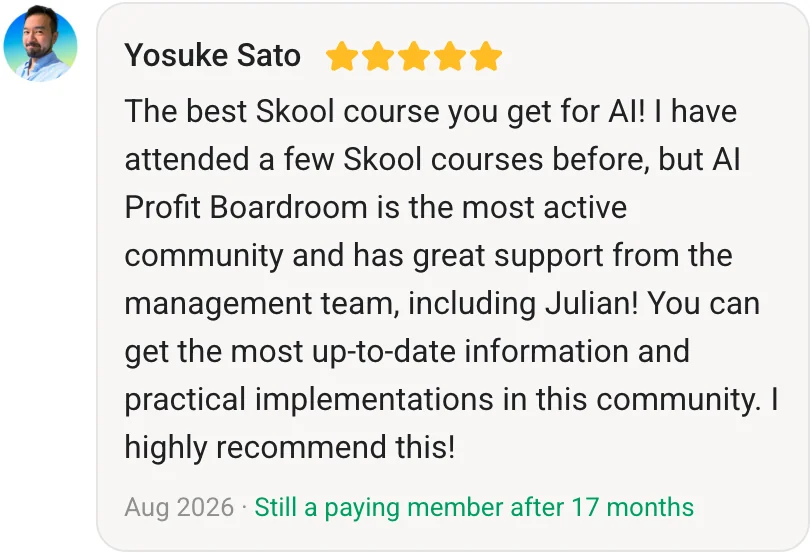
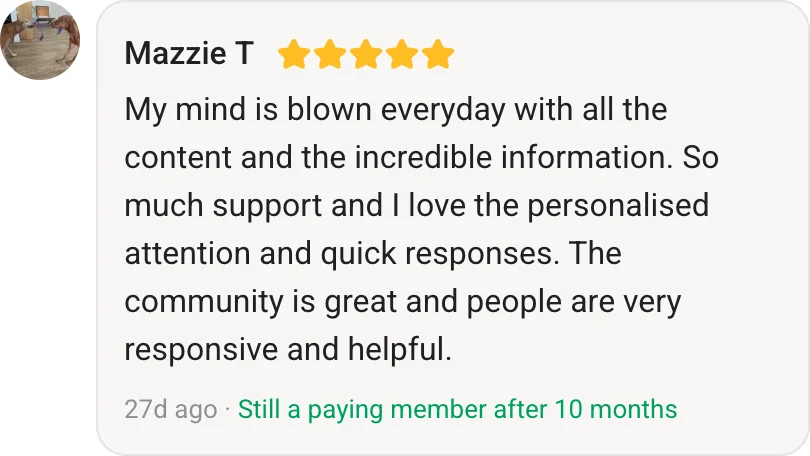
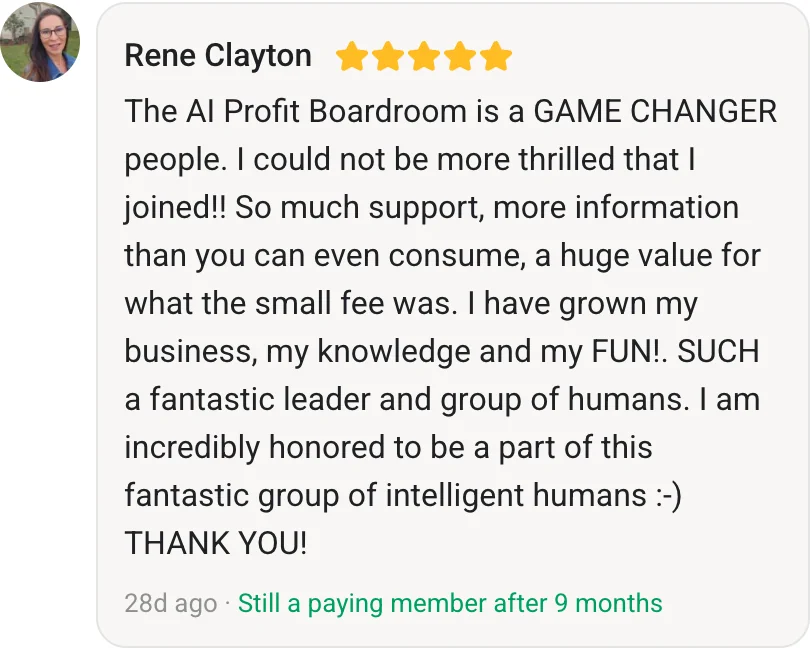
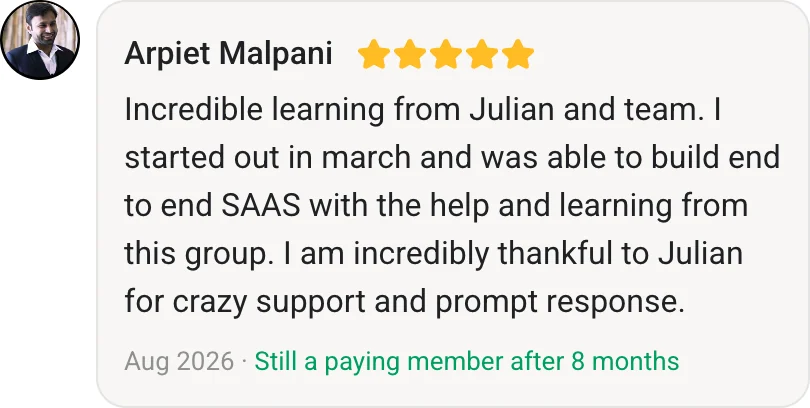
- Agent OS Member Testimonials — real wins from operators running the same Agent OS stack.
Also On Our Network
- Read on aiprofitboardroom.com
- Read on juliangoldieaiautomation.com
- Read on aisuccesslabjuliangoldie.com
- Read on aimoneylabjuliangoldie.com
Related reading
- Hermes Agent OS for founders — the founder-focused view of the same stack.
- Agentic AI OS — the deeper technical breakdown of the mission stack.
- Hermes Agent Mission Control — the dashboard walkthrough up close.
- Claude Hermes Agent — how Claude wires into the Hermes layer.
The agent os is what turns four disconnected AI tools into one business operating system, and once you've run yours for thirty days you won't go back.