How to setup Hermes agent in one click depends entirely on which of the three free methods you pick — cloud, local, or Max Hermes hosted. Most setup tutorials drag this out unnecessarily, so this post is short. I'll cover all three methods, when each one wins, and what to pick based on your machine and your tolerance for setup work.
Three methods, no fluff. Pick whichever fits your setup.
How To Setup Hermes Agent — The Quick Answer
If you want a free cloud setup, use a free cloud model. If you want fully free plus local, use Ollama with Gemma 4 or DeepSeek. If you don't want any technical setup at all, use Max Hermes (paid hosted).
For most users, the local Ollama route is the smartest pick — fully free forever, no token limits, and runs on most modern laptops.
What Hermes Agent Actually Is
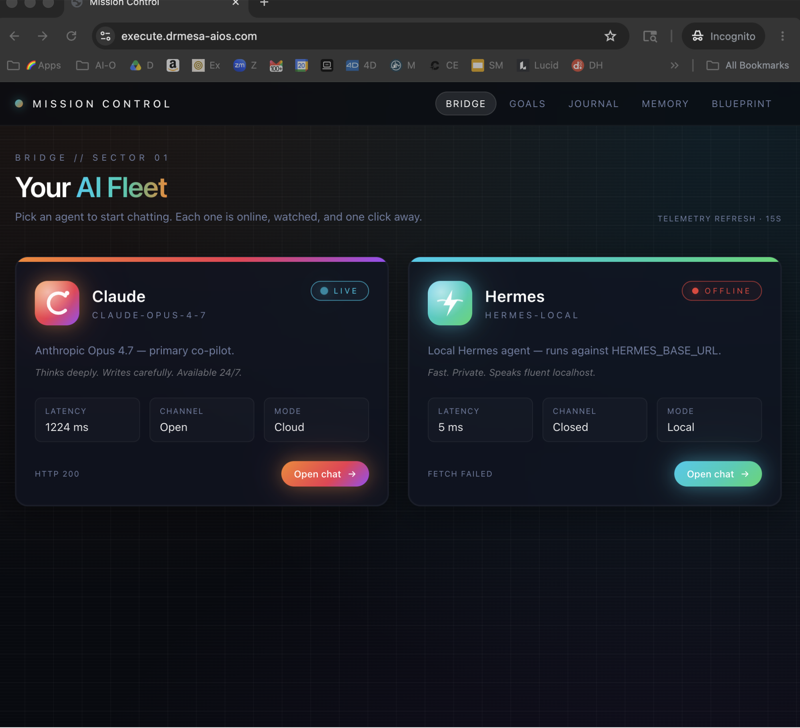
Quick context before the methods. Hermes is a self-improving AI agent that's open source and free. It works with 70+ skills out of the box and runs with a wide range of models, both cloud and local.
That flexibility is exactly why "how to setup Hermes agent" depends on which model and host you pick — there isn't one canonical setup, and that's a feature rather than a bug.
Method 1 — Cloud Model (Free, Instant)
The fastest way to try Hermes if you don't want to install much.
The steps are simple. Pick a cloud model with a free tier on the platform you choose, copy the install command, paste it in your terminal, and hit enter. Wait for it to load and you're done.
The pros are fastest setup, no big downloads, and it works on any machine with no hardware constraints. The cons are that free cloud models have token limits, heavy daily use will hit those limits, and quality varies by model. For testing, it's a solid choice. For daily production work, the limits get in the way.
Method 2 — Local Ollama Model (Free, Slightly Longer Setup)
The recommended path for most serious Hermes users.
The steps take about ten minutes. Download Ollama from ollama.com and install it like any normal app. Open your terminal and run ollama run gemma4 (or deepseek, or qwen 3.6, etc). Wait for the model download (5-20 minutes depending on size). Connect Hermes config to local Ollama URL: http://localhost:11434. Restart Hermes and you're done.
The pros are that it's fully free with no token limits, your data stays on your machine for privacy, and it's always-on even without internet. The cons are that it needs a reasonable laptop (8GB RAM minimum for small models), the initial download takes time, and bigger models need more RAM.
If you've followed my Ollama Hermes walkthrough, this is the same setup.
Method 3 — Max Hermes (Paid, Zero Setup)
Hermes hosted in the cloud through MiniMax.
The steps are minimal. Go to agent.mminia.io, click "Start Now," wake up Max Hermes, wait about 20 seconds for skills to load, and chat directly inside MiniMax. That's it.
The pros are zero technical setup, multimodal capabilities (image generation, video — built into MiniMax), and no terminal required. The cons are that it's not free (paid plan required), it can't link to Telegram or other apps, you can't upload files, and there's less customisation than running Hermes yourself. For non-technical users who want zero friction, this is the option.
🔥 Want my full Hermes setup with all 3 methods? Inside the AI Profit Boardroom, I walk through cloud, local, and Max Hermes setup in detail. Plus a 2-hour Hermes course covering every workflow, weekly live coaching where you can share your screen, and 3,000+ members helping each other. → Get the setup
Recommended Models For Each Method
For cloud models when you're using the cloud route, the best picks are Kim K2.5, GLM 5.1 Cloud, Qwen 3.5 Cloud, and MiniMax M2.7 Cloud.
For local Ollama models, Gemma 4 is the best lightweight pick at only ~7GB and runs on light laptops. DeepSeek is designed specifically for agentic tasks. Qwen 3.6 is solid as a general-purpose model. Nvidia Nemotron 3 Nano Omni is great for sub-agents at ~28GB.
I cover model picks in detail in Hermes Gemma 4 and Hermes DeepSeek.
Skipping Terminal Entirely
If terminal scares you, skip it entirely. The trick is to use Claude Code or Codex.
Copy the Hermes install command from GitHub, paste it into Claude Code, and type "set this up for me." Claude Code will run the install for you. Same trick works with Codex. I cover this in Free Claude Code.
Which Method To Pick
Use this decision tree. If you want free plus lightweight and don't mind cloud limits, pick Method 1 (cloud). If you want free plus no limits and have a decent laptop, pick Method 2 (local Ollama). If you don't want any setup and are willing to pay, pick Method 3 (Max Hermes).
For most users, Method 2 wins on every dimension that matters.
What Hermes Can Do After Setup
Once installed, Hermes runs with 70+ skills including web search, browser automation, terminal CLI, memory profiles, text-to-speech, file operations, and many more. You can switch between models any time without re-installing.
If you want a deeper feature walkthrough, see Hermes Agent Workspace.
Common How To Setup Hermes Agent Mistakes
Four mistakes that trip people up most often.
The first is picking too big a local model on a small laptop. Start with Gemma 4 if you're under 16GB RAM. The second is forgetting Ollama needs to be running — Hermes can't see Ollama if Ollama isn't open, so set Ollama to auto-start at login. The third is trying Max Hermes for production work; it's great for testing but limited for production with no Telegram link and no file uploads. The fourth is skipping the Claude Code shortcut for non-tech users — if terminal commands frustrate you, the Claude Code shortcut is genuinely the easiest path.
Daily Reality
Once Hermes is running, the daily flow is simple. Open Hermes, chat with your AI agent, and it uses skills (web search, browser, etc) as needed. Switch models any time. Free forever if you're running local.
🚀 Want my full Hermes automation system? The AI Profit Boardroom has my full 2-hour Hermes course, daily training drops, weekly live coaching, and 3,000+ members building real automations. Plus a 6-hour OpenClaw course if you want to compare both. → Join here
FAQ — How To Setup Hermes Agent
Which method is fastest?
Cloud (Method 1) — under a minute.
Which method is fully free?
Cloud (free tier) and local Ollama — both fully free.
Which method needs the most hardware?
Local Ollama with bigger models like Nemotron 3 (28GB).
Will Max Hermes link to Telegram?
No — it's locked inside MiniMax.
Can I switch methods later?
Yes — Hermes config supports multiple providers simultaneously.
What if I'm not technical?
Use Claude Code to run the install for you.
Which model is best for a beginner?
Gemma 4 with Ollama — small, fast, fully free.
Related Reading
- Ollama Hermes — local Ollama setup.
- Hermes Gemma 4 — beginner local model.
- Hermes Agent Workspace — what to do after install.
📺 Video notes + links to the tools 👉
🎥 Learn how I make these videos 👉
🆓 Get a FREE AI Course + Community + 1,000 AI Agents 👉
That's how to setup Hermes agent across all 3 free methods — pick the one that fits your setup and you'll be running in minutes.