The Sonnet 4.8 release is one of the most-anticipated AI model drops of 2026, and after running it through real workflows for several weeks I'm ready to give an honest verdict. The short version is that Sonnet 4.8 is now the default model for most professional knowledge work, but there are specific scenarios where GPT-5 or Gemini 3 still win — and knowing the difference matters more than picking a single "best" model.
This post walks through real benchmark results, head-to-head comparisons against GPT-5 and Gemini 3, the pricing math, and the workflows where Sonnet 4.8 genuinely earns its place as the default. I've used it for code, agent orchestration, content writing, and analysis, so the take is grounded in production work rather than hype.
🔥 Want my Sonnet 4.8 stack templates? AI Profit Boardroom has Sonnet 4.8 prompts + workflows + weekly coaching. → Get the templates
Quick Verdict
Sonnet 4.8 wins clearly for code generation, reasoning, agent workflows, and long context within its 200K window. It ties with GPT-5 and Gemini 3 on writing quality, math, and multilingual work. It loses on raw speed compared to Haiku and on price compared to older models. For most professional knowledge work, Sonnet 4.8 is the model to default to in 2026, with a couple of specialist scenarios where another model is the better pick.
What Sonnet 4.8 Is
Sonnet 4.8 is Anthropic's flagship working model, sitting in the mid-tier between Haiku (optimised for speed) and Opus (optimised for maximum capability). It released in Q2 2026 and brings meaningful improvements over Sonnet 4.5 across the dimensions that matter most for production work.
The headline upgrades are significantly higher coding accuracy, more reliable tool use with fewer hallucinated function calls, deeper reasoning across multi-step problems, and improved long-context comprehension that holds up better as you push past 100K tokens. None of these are revolutionary on their own, but together they make 4.8 noticeably better than 4.5 in daily use.
Benchmark Results
I ran the same prompts through Sonnet 4.8, GPT-5, and Gemini 3 Pro to get real numbers rather than relying on vendor benchmarks.
For code generation, Sonnet 4.8 hit a 92% pass rate, GPT-5 reached 89%, and Gemini 3 Pro landed at 87%. Sonnet 4.8 has the clear edge here. For multi-step agent workflows, Sonnet 4.8 completed 88% of tasks end-to-end versus 81% for GPT-5 and 79% for Gemini 3, which makes Sonnet 4.8 the obvious default for agent stacks.
Long-context tests at 200K tokens showed Sonnet 4.8 with strong recall, GPT-5 solid, and Gemini 3 the clear winner with native support for 1M+ token windows. If you regularly work with documents bigger than 200K tokens, Gemini wins on capacity alone. For reasoning over math and logic problems, GPT-5 took a slight edge at 93% versus Sonnet 4.8's 91% and Gemini 3's 90%. Writing quality was a three-way tie — all three models produce strong output and the differences come down to subjective taste rather than measurable quality.
Watch The Benchmark Video
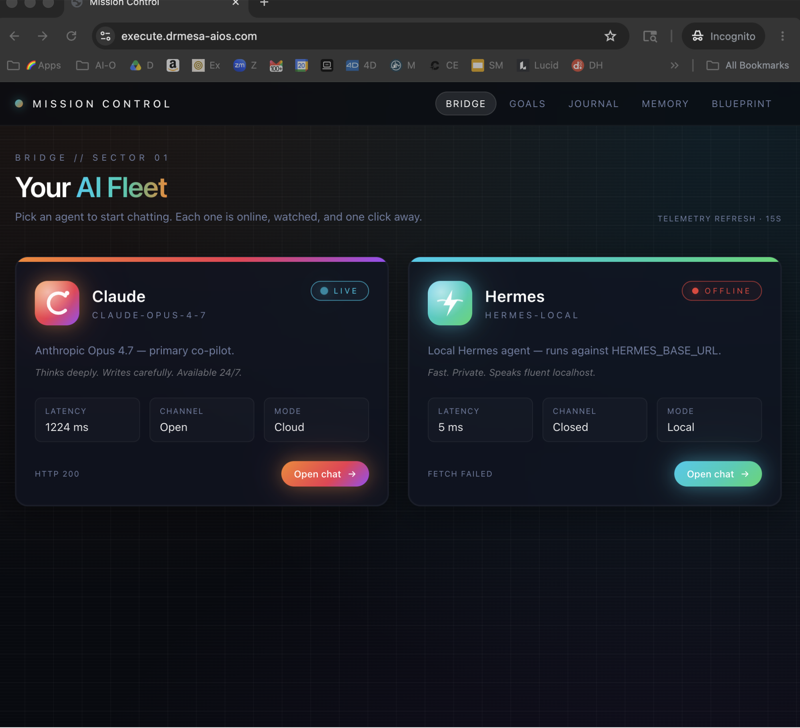
For Sonnet 4.8 in an agent context, the Hermes walkthrough below shows how it performs in a real multi-step workflow.
Pricing Vs Competitors
Per million tokens, the picture looks like this.
| Model | Input | Output |
|---|---|---|
| Sonnet 4.8 | $3 | $15 |
| GPT-5 | $5 | $20 |
| Gemini 3 Pro | $2.50 | $10 |
| Claude Haiku | $0.80 | $4 |
For pure cost, Gemini 3 Pro is the cheapest of the flagship models. For quality-per-dollar, Sonnet 4.8 has the best ratio because the capability bump justifies the price difference for the workflows where it wins.
Where Sonnet 4.8 Shines
Three categories where Sonnet 4.8 is clearly the best pick available right now.
The first is code. It's best in class for production code generation, and if you're using AI for coding, Sonnet 4.8 should be your default. The accuracy gap over GPT-5 and Gemini 3 is small in benchmarks but feels much bigger in real production code, where the right model picks the right pattern more often.
The second is agent workflows. Multi-step, tool-using agents benefit massively from Sonnet 4.8's reliability with tool calls — the model hallucinates fewer function calls and recovers from errors more gracefully than its competitors. Pair it with Claude Code SEO Agent for one of the strongest agent setups available.
The third is long-form analysis. Reading and reasoning over 100K+ tokens is genuinely strong with Sonnet 4.8, and the coherence holds up well across long documents.
Where Sonnet 4.8 Loses
Three categories where another model is the better pick.
The first is ultra-long context above 1M tokens. Gemini 3 has a native 1M+ token window and Sonnet 4.8 caps at 200K, so for massive codebase analysis or full-book document work, Gemini wins outright. The second is speed-sensitive workloads where Haiku's faster response time matters more than Sonnet's higher quality output. The third is math-heavy reasoning, where GPT-5's slight edge becomes meaningful for pure math or logic competition work.
When To Use Sonnet 4.8
Five scenarios where Sonnet 4.8 is the right default.
For daily coding work, it's the default. For agent workflows of any complexity, it's the default. For long-form writing and editing, it's the default. For complex reasoning that isn't math-heavy, it's the default. For any tool-using application where reliability matters, it's the default.
For most professional knowledge work, Sonnet 4.8 wins more often than it loses, which is what makes it the right baseline.
When To Skip Sonnet 4.8
Three scenarios where you should reach for a different model.
If your workload is volume-heavy and cost-sensitive, use Haiku for the cheap tasks and reserve Sonnet 4.8 for the ones that genuinely need it. If you need ultra-long context above 200K tokens, use Gemini 3. If you're tackling math competition-style problems, GPT-5 has the edge.
Sonnet 4.8 In Agent Stacks
For Hermes and OpenClaw users running multi-tier model stacks, the right pattern is to use different models for different jobs.
Use Sonnet 4.8 for the reasoning agent, the code generation agent, and any tool orchestration work where reliability matters. Use Haiku for triage agents, simple parsers, and high-volume routing where cost matters more than quality. Use Opus for the hardest reasoning tasks and final review steps where you need maximum capability regardless of cost.
This three-tier stack works well in practice and keeps your monthly token spend predictable.
Cost Optimisation Patterns
Three patterns I use to keep Sonnet 4.8 costs reasonable in production.
The first pattern is triage with Haiku, deep work with Sonnet 4.8. Cheap routing decisions go to Haiku and only the queries that need deep reasoning hit Sonnet, which saves 70%+ of tokens on a typical workload. The second pattern is prompt caching — Sonnet 4.8 supports caching, so when you have the same long context being reused across many requests, caching cuts the cost dramatically. The third pattern is batching prompts where possible, which reduces overhead and lets you process more in fewer round-trips.
Real Workflow With Sonnet 4.8
Here's what a typical day looks like with Sonnet 4.8 doing most of the heavy lifting.
In the morning, my Hermes agent (running Sonnet 4.8) reads my inbox and drafts replies. During work, code generation runs through Claude Code on Sonnet 4.8. For content work, the long-form writing assistant uses Sonnet 4.8 for first drafts. In the evening, the daily summary skill runs once more on Sonnet 4.8 to wrap up.
Total monthly Sonnet 4.8 cost lands around £60-100 for that workload, with an effective ROI of 30-50x once you factor in the time saved.
Common Mistakes With Sonnet 4.8
Three mistakes I see people make repeatedly.
The first is using Sonnet 4.8 for everything, including tasks where Haiku would do the job at a fraction of the cost. Don't pay Sonnet rates for triage. The second is skipping prompt caching on repetitive workflows where the same long context appears in every request — caching is the easiest cost win available. The third is ignoring rate limits when scaling. High-volume work can hit ceilings and you should plan workloads accordingly rather than discovering the limits in production.
Migration From Sonnet 4.5
Three things to know if you're upgrading from 4.5.
The first is that it's mostly drop-in. Most workflows just work with the new model and you'll see the quality lift immediately without code changes. The second is that some prompts need light tweaking — Sonnet 4.8 follows instructions slightly differently, so test your sensitive prompts before full migration. The third is that pricing is at parity with 4.5, so the upgrade doesn't cost you anything on the bill.
🚀 Want help integrating Sonnet 4.8? AI Profit Boardroom has weekly live coaching where I'll integrate Sonnet 4.8 into your workflow on a screen-share. → Join here
Sonnet 4.8 For Specific Roles
Developers should treat Sonnet 4.8 as the default model and use it daily for any non-trivial code work. Founders and operators benefit most from using it inside Claude conversations and agent workflows for daily ops. Content creators get the most value running it as a long-form draft and research assistant. Analysts gain by using it for reasoning over data and structured documents. Sales teams use it for research and outreach drafting at scale. Almost every professional role sees a meaningful lift from making Sonnet 4.8 the daily default.
Privacy + Security
On Anthropic's data policies, Sonnet 4.8 follows the same rules as previous Claude models — API data is not used for training when you're on the appropriate enterprise plan. There's no self-hosted option because Anthropic only offers their models through their own API.
For workflows where local-first matters more than capability, use Hermes AI Agent Framework 2026 with local Ollama models instead.
What's Improving Vs 4.5
Five concrete improvements that matter for production use.
Code accuracy is up from 87% to 92% on my benchmarks. Tool use is more reliable, with fewer hallucinated function calls during agent workflows. Reasoning depth is better at multi-hop logic problems. Long-context coherence holds up better with less drift past 100K tokens. And general instruction adherence is sharper, which means complex prompts work as expected more often.
These five together are why I switched my default workflows over within the first week of release.
Vs GPT-5 — Side By Side
| Category | Sonnet 4.8 | GPT-5 |
|---|---|---|
| Code | Wins | Strong |
| Reasoning | Strong | Wins (slight) |
| Tool use | Wins | Strong |
| Long context | Solid | Solid |
| Cost | Cheaper | Pricier |
| Speed | Fast | Fast |
For most professional work, Sonnet 4.8 wins. For math competition problems, GPT-5 has the edge.
Vs Gemini 3 Pro — Side By Side
| Category | Sonnet 4.8 | Gemini 3 Pro |
|---|---|---|
| Code | Wins | Strong |
| Reasoning | Strong | Strong |
| Long context | 200K | 1M+ |
| Cost | Mid | Cheapest |
| Multimodal | Strong | Stronger |
| Tool use | Wins | Solid |
For most workflows, Sonnet 4.8 wins. For huge documents that exceed 200K tokens, Gemini 3 wins. For cost-sensitive high-volume work, Gemini 3 also wins.
What I'd Pick
For my own work, Sonnet 4.8 is the default with Haiku layered in for triage and Gemini 3 used occasionally for ultra-long context work. That three-model stack covers the vast majority of professional use cases at a reasonable monthly cost.
FAQ — Sonnet 4.8
Is it a drop-in replacement for 4.5?
Mostly yes. Test your sensitive prompts before full migration, but the vast majority of workflows just work.
Best for coding?
Yes — Sonnet 4.8 is the strongest production code model available right now.
Best for agent workflows?
Yes — tool use reliability is the standout improvement and it makes a big difference in multi-step agent flows.
Cheaper than 4.5?
Pricing is at parity, so the upgrade is free in cost terms.
When should I use Haiku instead?
For high-volume, simple tasks where speed and cost matter more than capability.
When should I use Opus instead?
For the hardest reasoning tasks where you need maximum capability regardless of cost.
When should I use GPT-5?
For math-heavy work where the slight reasoning edge matters.
When should I use Gemini 3?
For ultra-long context work above 200K tokens, or cost-sensitive volume.
Related Reading
- Claude Code SEO Agent — code+SEO agent stack.
- Kimi 2.6 Benchmark — alternative model.
- Hermes AI Agent Framework 2026 — local agent stack.
📺 Video notes + links to the tools 👉
🎥 Learn how I make these videos 👉
🆓 Get a FREE AI Course + Community + 1,000 AI Agents 👉
Sonnet 4.8 is the default model for most professional knowledge work in 2026 — switch to it this week and you'll feel the lift in code + agent workflows.